
Free visual inspection and a written scope of work before any mitigation begins - photos, moisture readings, and drying logs go in your claim file
The scope we write is the scope we bill. Anything new gets shown to you, in writing, before we touch it.
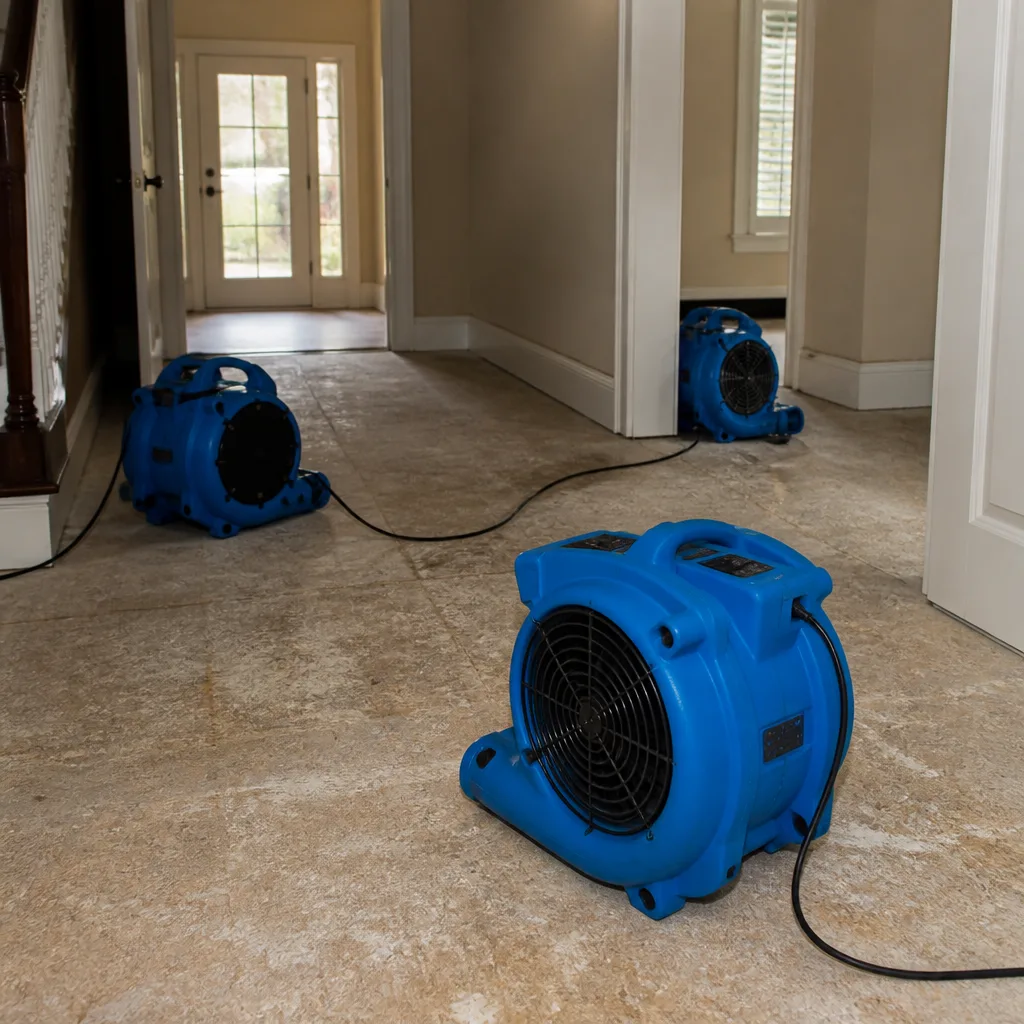
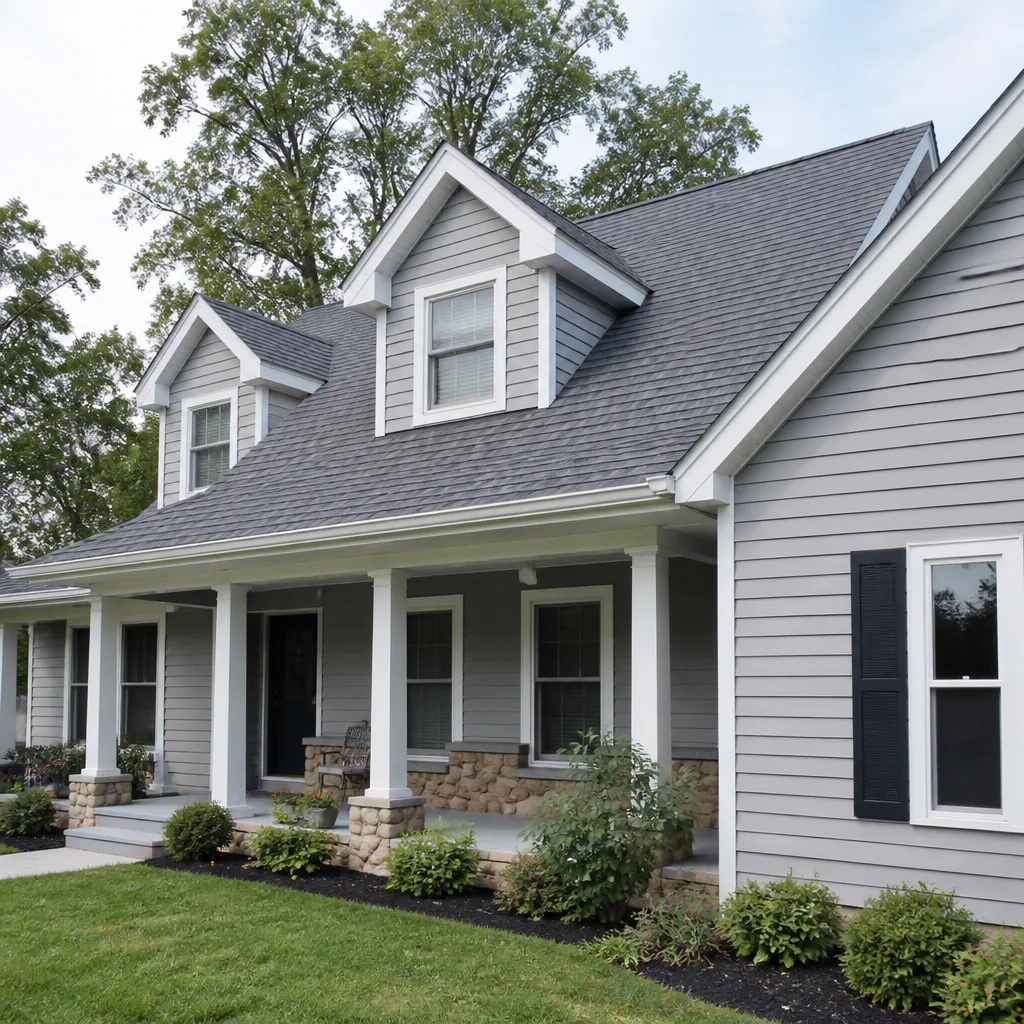
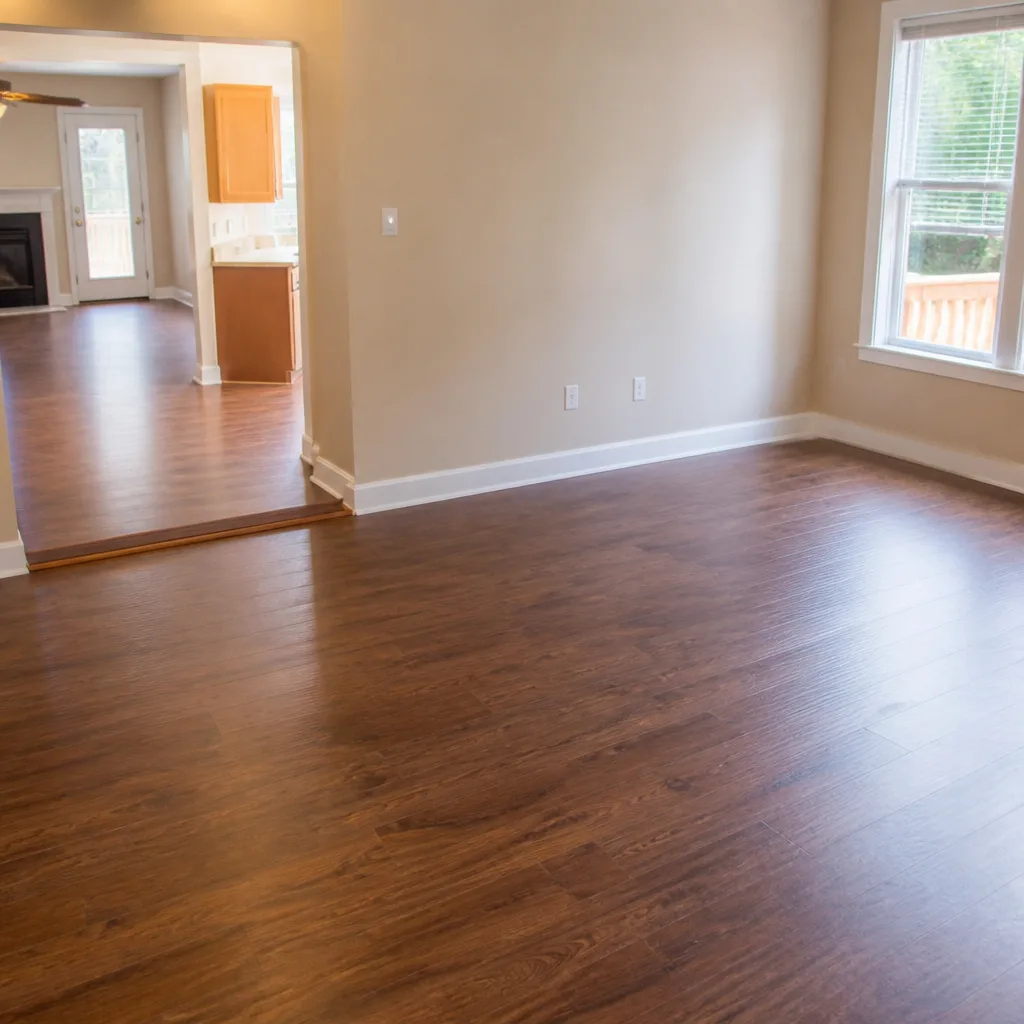
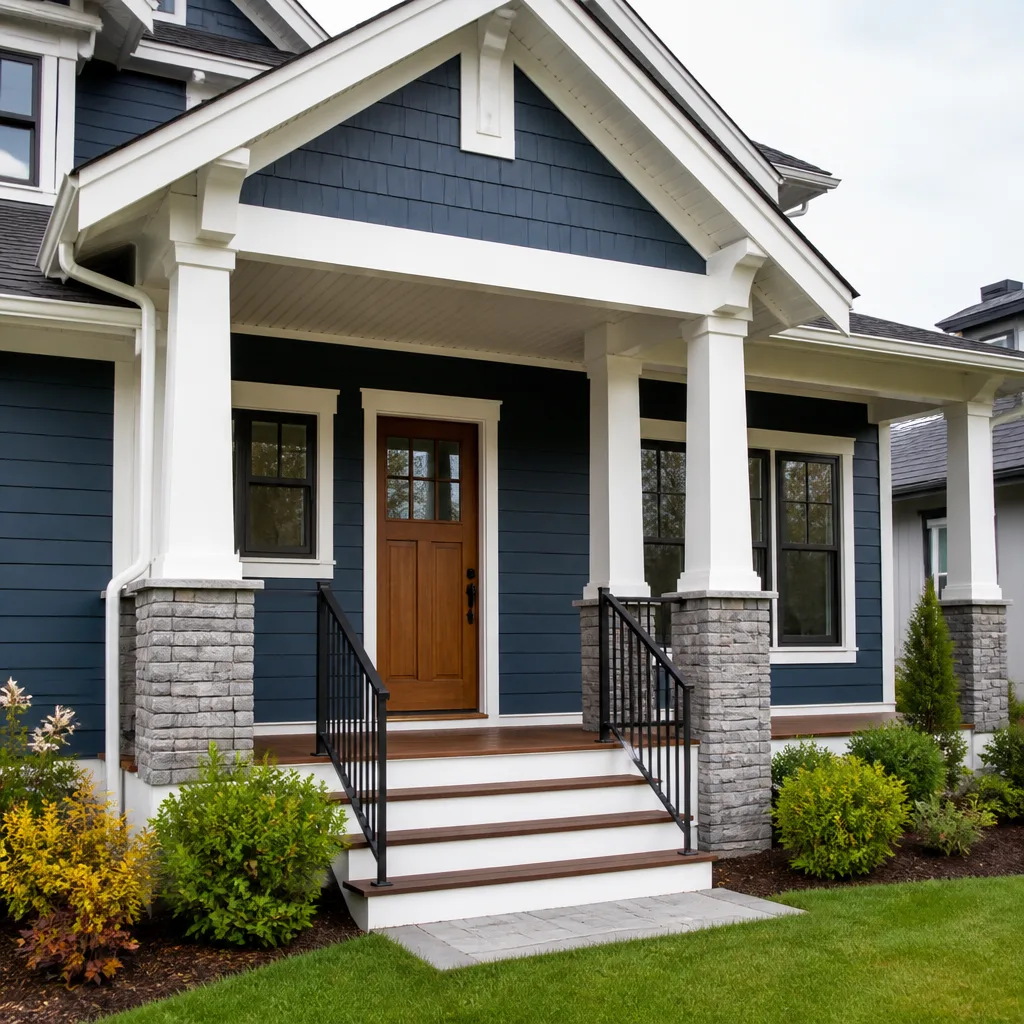
 Before
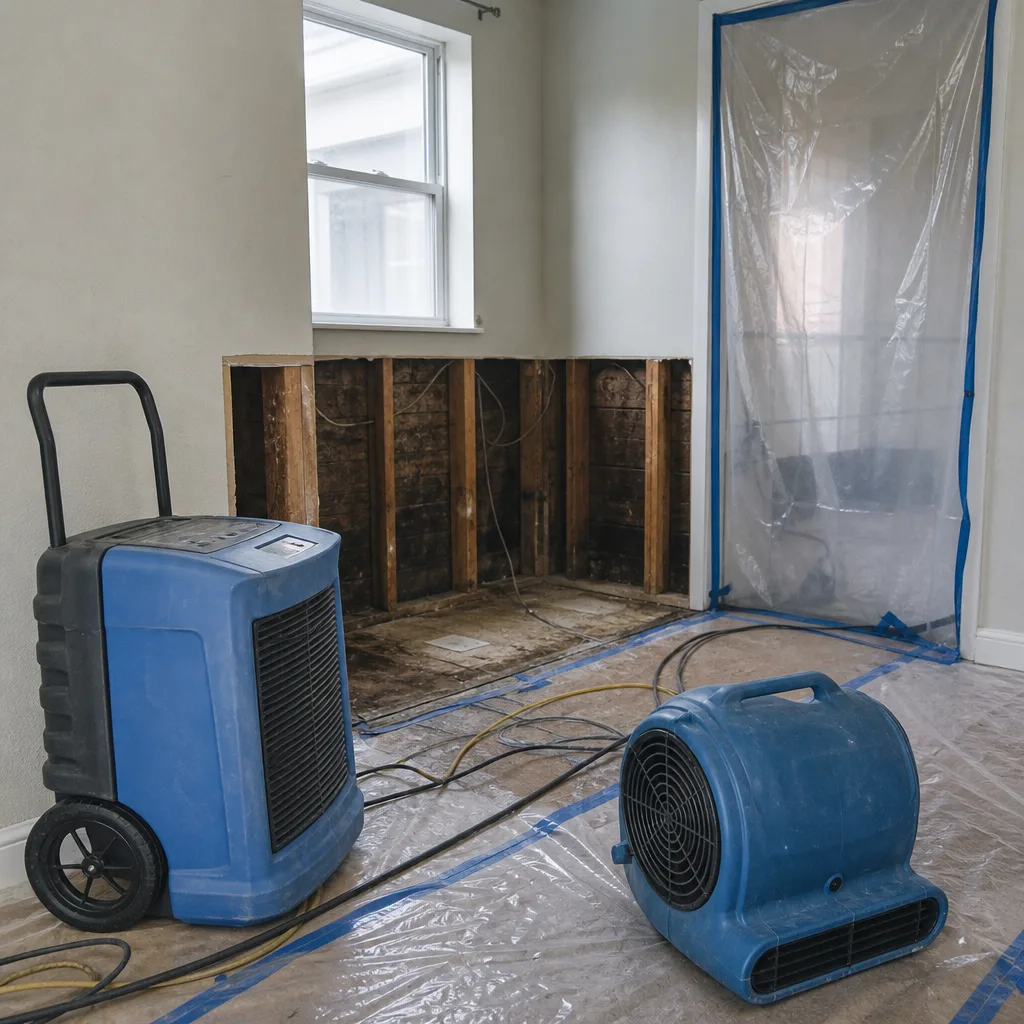 After
After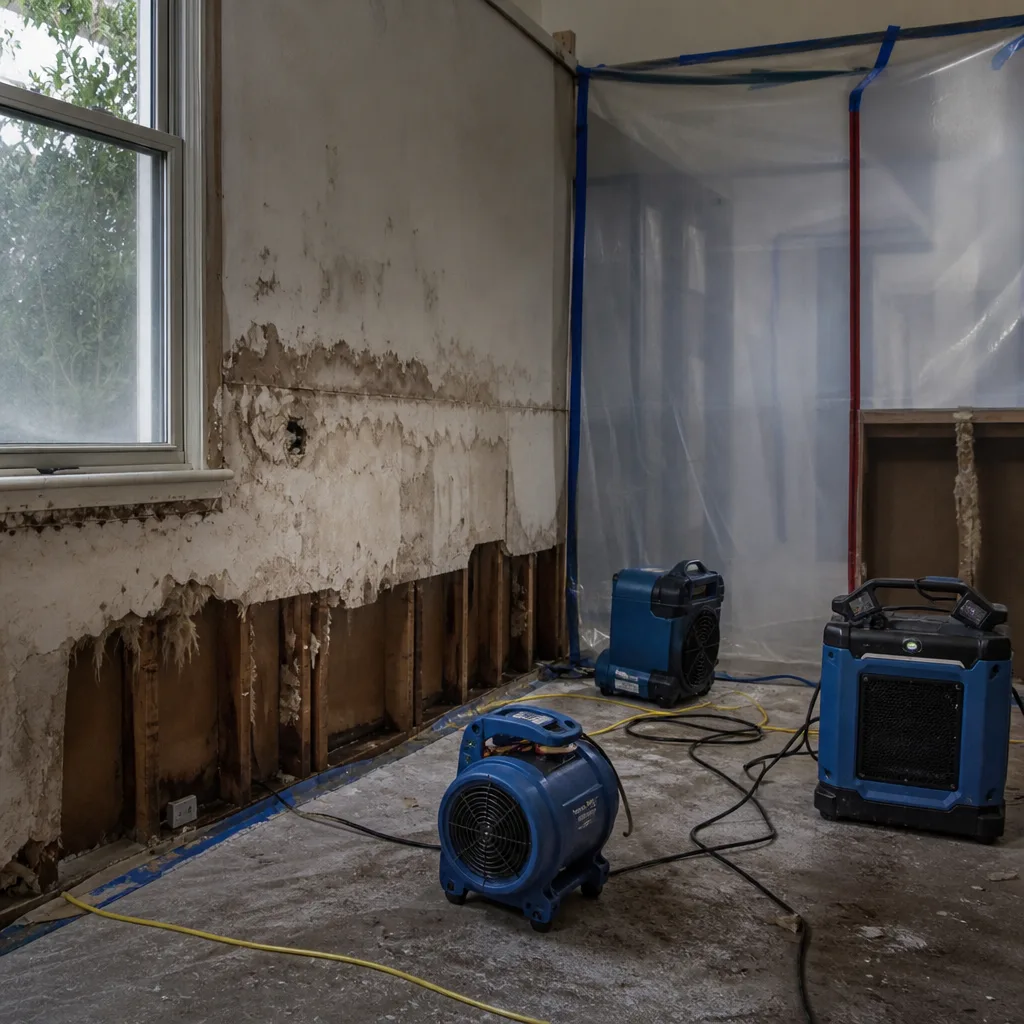 Before
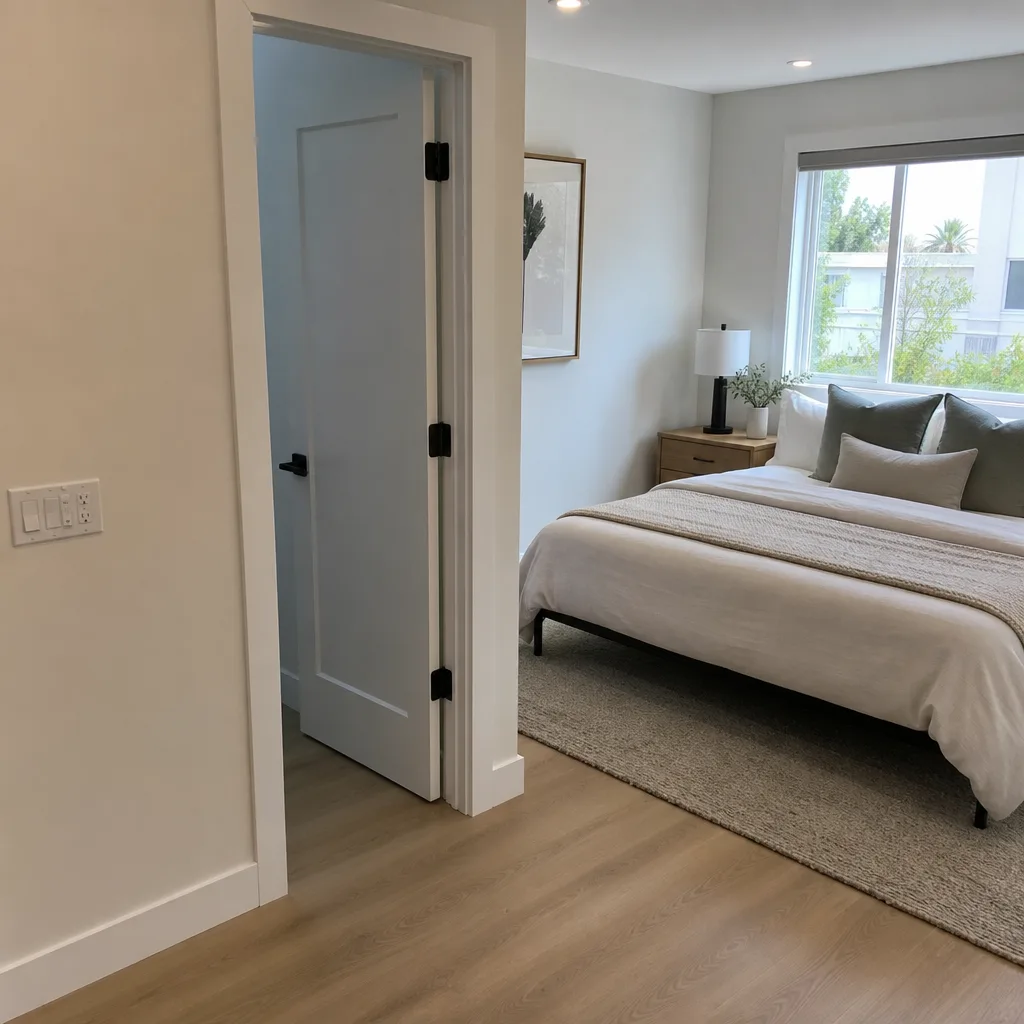 After
After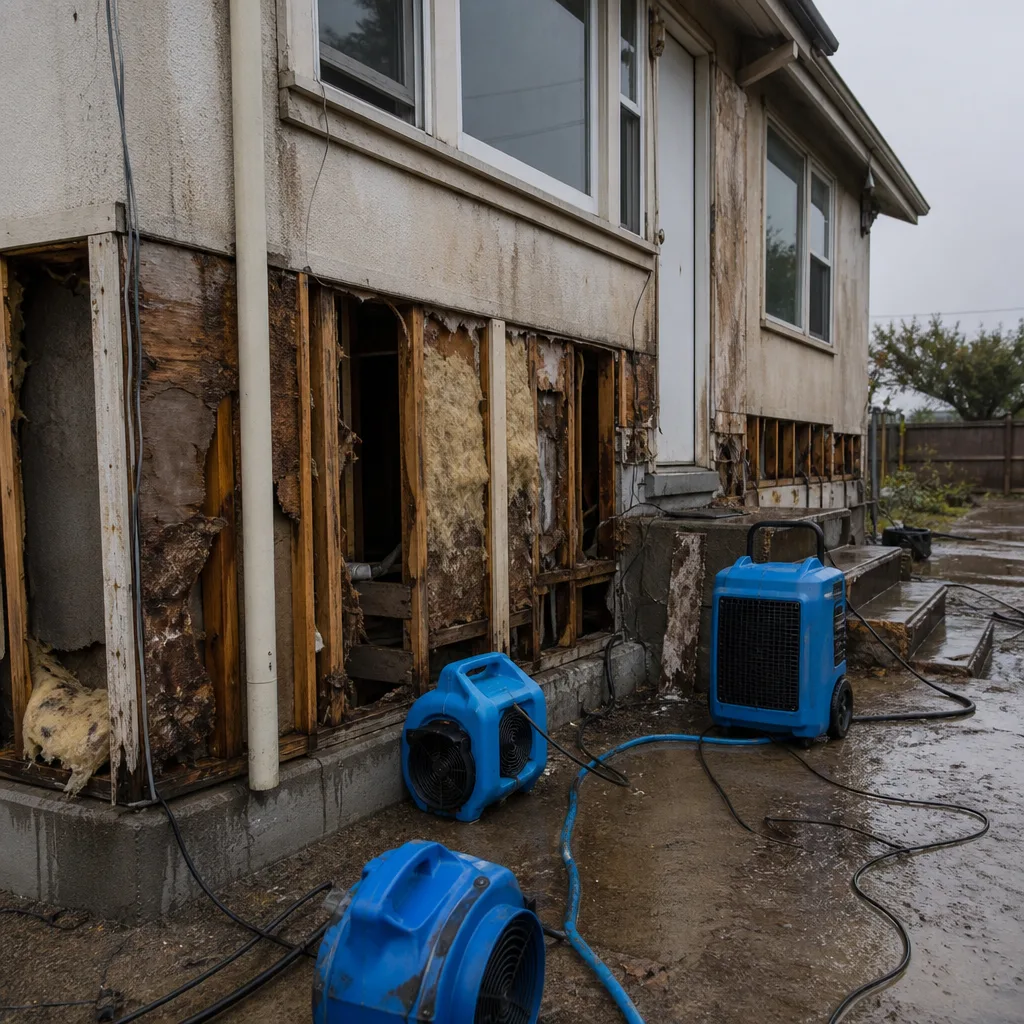 Before
 After
After24/7 Emergency Mold Remediation in Manhattan Beach
Mold remediation in Manhattan Beach typically costs $2,800-$7,500 for contained residential jobs, with full-structure treatments in Sand Section homes running higher due to marine-grade component replacement and multi-story containment complexity. Most inspections can be scheduled within 4 hours, and our crews carry containment materials and HEPA equipment on every truck serving the Manhattan Beach area. Call (424) 372-0129 - a live person answers, 24 hours a day, no voicemail trees. The first 24-48 hours after water intrusion determines whether mold colonizes behind your tile and inside wall cavities; after that window, remediation costs multiply and insurance coverage narrows.
Understanding Mold Remediation Severity in Manhattan Beach Properties
We classify mold contamination by affected square footage, material porosity, and whether the growth is active or dormant. Category 1 contamination covers under 10 square feet of non-porous surfaces - tile, glass, sealed metal - and responds to surface treatment with HEPA vacuuming and antimicrobial application. Category 2 extends to 10-100 square feet, often involving porous drywall, insulation, or carpet, requiring controlled demolition and air scrubbing. Category 3 exceeds 100 square feet or involves HVAC systems, representing a whole-structure event requiring full containment with negative air pressure, tertiary drying to IICRC S520 standards, and third-party clearance testing.
Manhattan Beach’s housing stock creates distinct severity patterns. Sand Section’s narrow 30×90 foot three-story luxury builds, many reconstructed from mid-century beach cottages during the 2000s and 2010s, stack below-grade garages beneath living spaces with minimal ventilation - when El Niño overwash enters these subterranean parking structures, moisture wicks upward through party walls and floor assemblies, converting a garage Category 2 event into a whole-building Category 3 before occupants detect musty odors and need Manhattan Beach Water Damage Restoration. The older Tree Streets and Hill Section retain 1920s-1940s Craftsman and Spanish Colonial bungalows with original wood framing and aging galvanized plumbing; chronic marine-layer humidity keeps these assemblies in perpetual borderline moisture condition, so any plumbing failure or wind-driven rain intrusion immediately activates dormant spore colonies in wall cavities where decades of organic dust accumulation provides ready substrate.
Why Manhattan Beach Property Owners Choose DryMark Restoration Venice
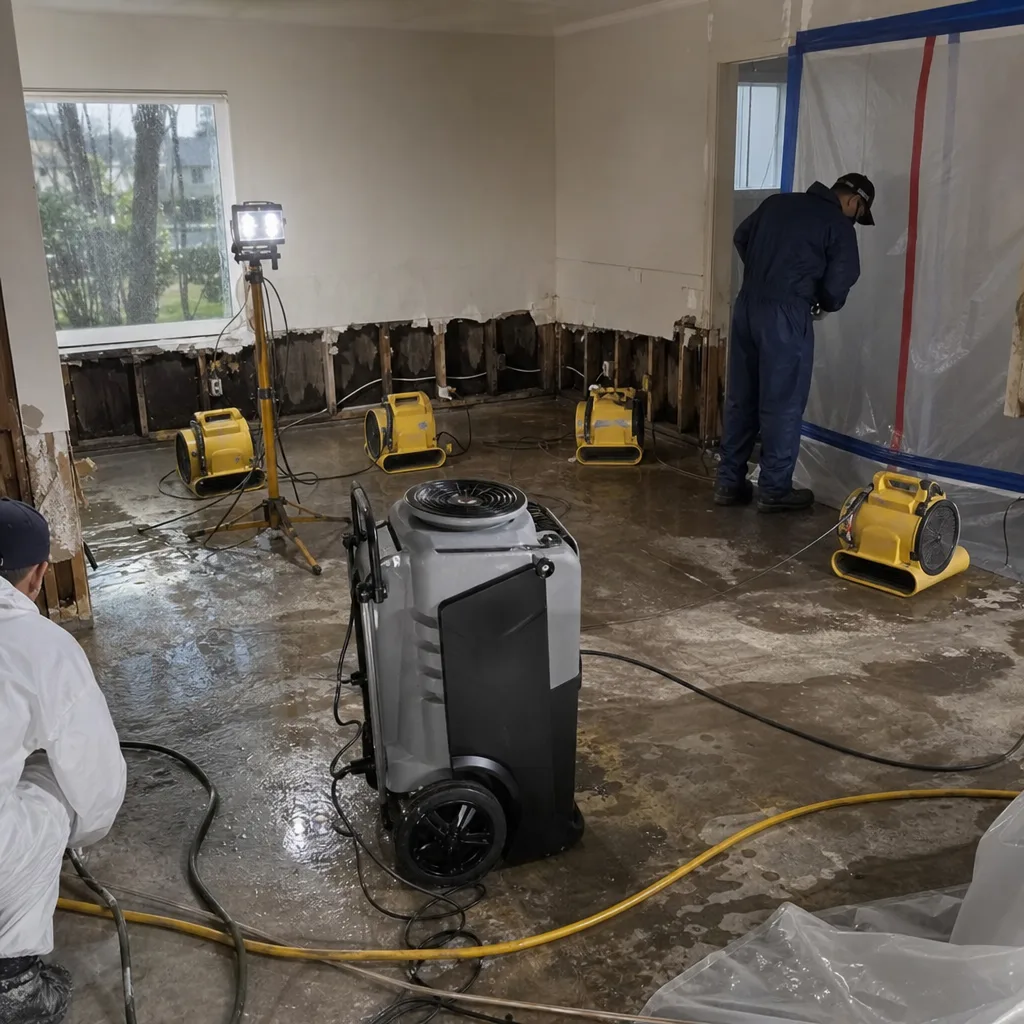
- 45-minute response commitment to Manhattan Beach from our Los Angeles office dispatch, with crews carrying containment and HEPA equipment on every vehicle.
- 24/7 live answer - a real person, never an automated system or next-business-day callback, because mold does not wait for business hours.
- IICRC-certified crews holding WRT (Water Damage Restoration Technician), AMRT (Applied Microbial Remediation Technician), and FSRT (Fire & Smoke Restoration Technician) credentials where cross-contamination scenarios apply.
- Free visual inspection and moisture mapping with documented photo record before any scope is proposed.
- Direct insurance billing with adjuster coordination included as standard, not an upsell - we produce the line-item estimates and daily drying logs carriers require.
- One team from microbial remediation through reconstruction, so no handoff gaps between the crew that contained the mold and the crew that rebuilds the wall.
 Before
 After
AfterOur Mold Remediation Process
1. Inspection & Assessment
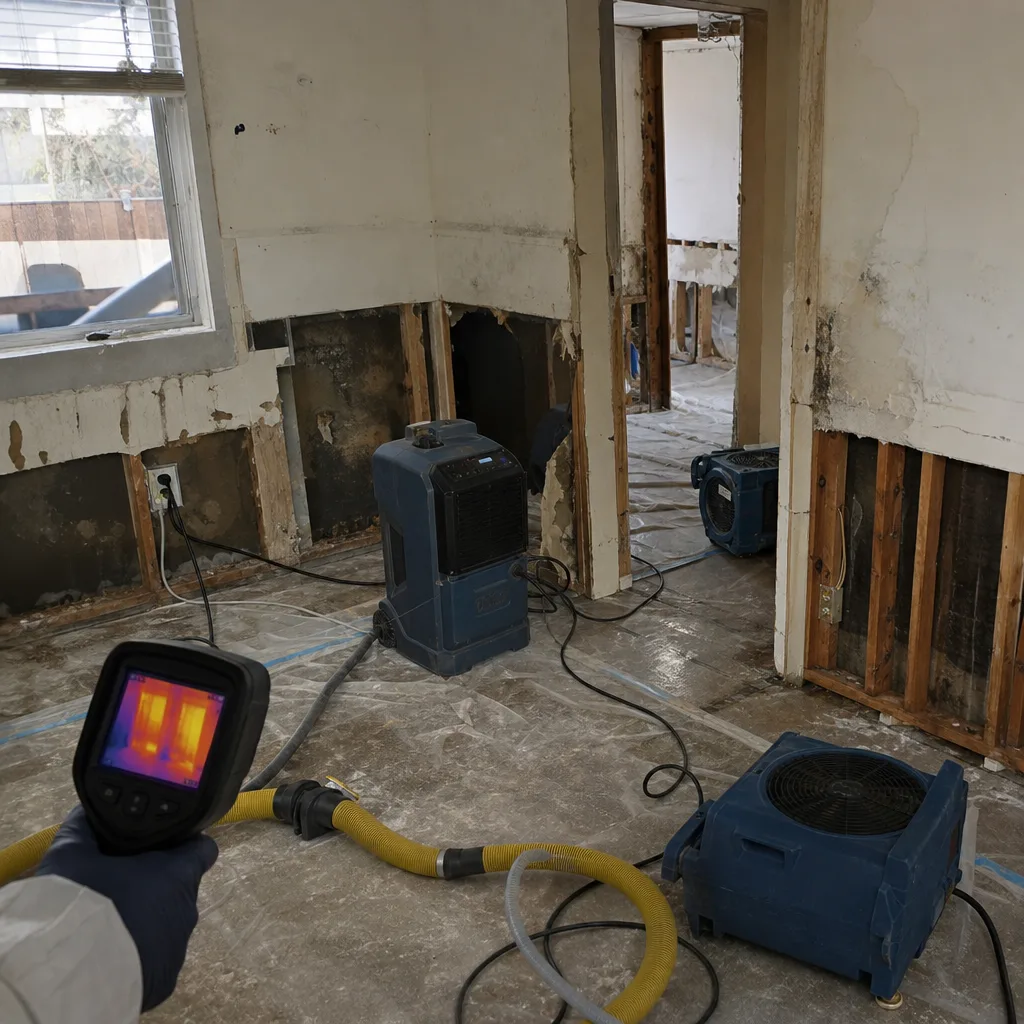
We map moisture readings with thermal imaging and calibrated hygrometers, identifying hidden colonization behind tile and inside wall cavities that visual inspection misses. In Manhattan Beach’s Sand Section, we specifically audit HVAC condenser coils and electrical panel components for salt-air corrosion that creates chronic moisture sources independent of any plumbing leak.
2. Containment & Air Filtration
We establish physical barriers with 6-mil polyethylene sheeting and negative air pressure using HEPA-filtered air scrubbers, preventing cross-contamination to unaffected areas during remediation. Multi-story Sand Section homes often require stacked containment zones with dedicated air filtration on each level.
3. Drying & Dehumidification
We deploy Dri-Eaz and Phoenix commercial dehumidifiers with Injectidry cavity drying systems to reduce vapor pressure differential and achieve tertiary drying - the point where moisture content in structural materials falls below the threshold that supports microbial growth. Daily psychrometric data logs document progress for insurance review.
4. Cleaning & Sanitization
HEPA vacuuming removes spore-bearing debris from all surfaces, followed by antimicrobial treatment to affected framing and subfloors. Porous materials exceeding contamination thresholds are removed per IICRC S520 guidelines, not merely surface-cleaned.
5. Salt-Air Corrosion Remediation
Unique to Manhattan Beach’s coastal zone, we replace pitted electrical components and destroyed HVAC condenser coils with marine-grade coated parts rated for salt-air exposure. Without this step, the chronic moisture source persists and mold recurs within seasons regardless of how thorough the initial remediation.
6. Repairs, Restoration & Documentation
Our reconstruction crew rebuilds to pre-loss condition with the same team that performed remediation, maintaining chain of custody on all documentation. Every visit generates a photo record; the final deliverable includes drying logs, moisture readings, and the 365-Day Done Right Promise under The Haven Standard.
Need Emergency Mold Remediation in Manhattan Beach Now?
Crews minutes away, answering live 24 hours a day. The sooner we start, the less it costs.
Working With Your Insurance Company
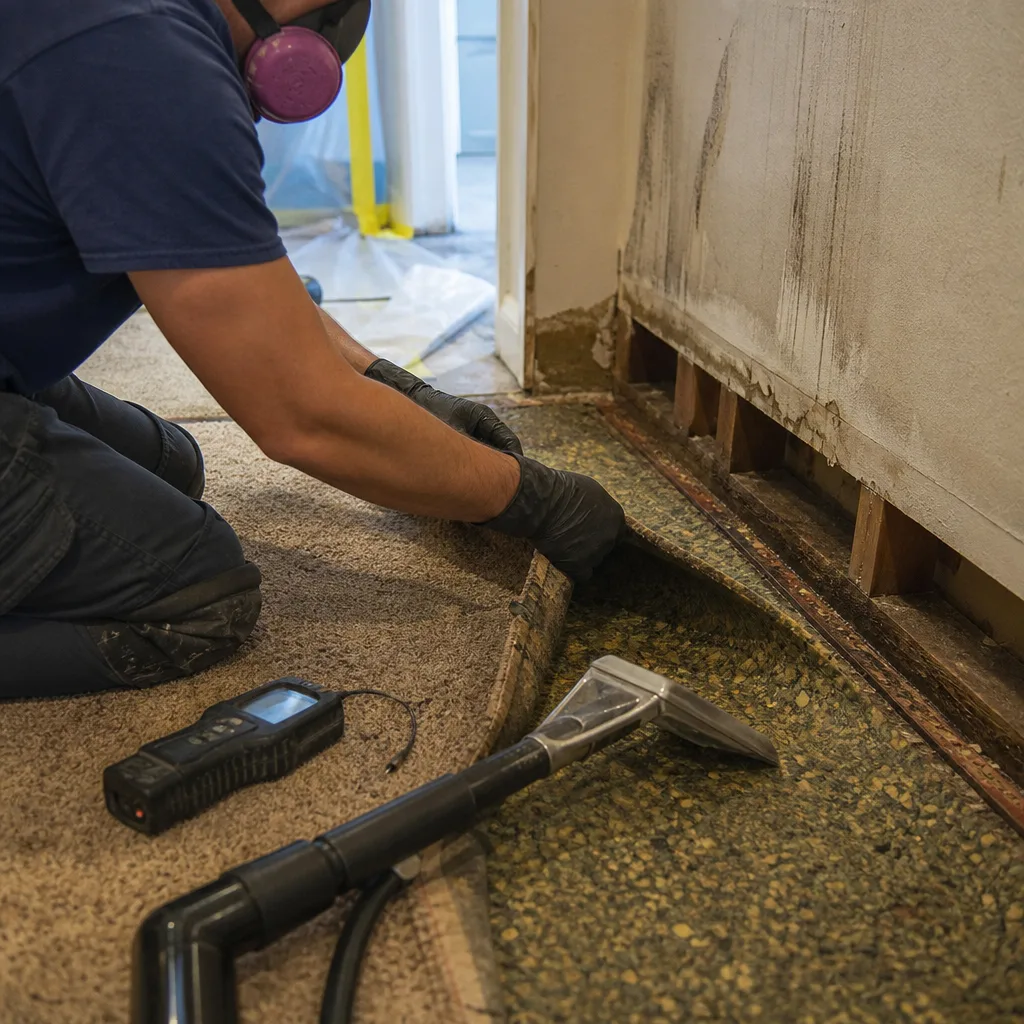
We begin documentation the moment we arrive: timestamped photos, moisture readings, material classifications, and a preliminary scope sketch. Our estimates follow Xactimate pricing standards with line-item detail that adjusters recognize and process without dispute. We coordinate directly with your carrier’s assigned representative, attending site visits when requested, and we do not commence billable work until you have a written price in hand - Haven Standard, Clause 1.
Most Manhattan Beach homeowners carry coverage for sudden and accidental water damage, but mold claims face specific limitations: policies typically cap mold remediation at $10,000 unless the mold resulted from a covered water loss reported promptly. Our documentation package demonstrates that causal link with moisture mapping timestamps and drying logs that trace the water path from intrusion to colonization.
What We Provide Your Insurer
- Thorough documentation of the loss
- Photos of all damage, room by room
- Moisture readings and drying logs
- A detailed, line-item scope of work
- Direct coordination with your carrier
Built for Manhattan Beach’s Loss Calendar
January through March brings El Niño winter storm cycles with intense rainfall and occasional coastal overwash along The Strand, pushing Category 2 and Category 3 water directly into below-grade garages and ground-level entries of Sand Section’s three-story builds. April through June, the marine layer thickens and persists longest - interior humidity climbs without any plumbing failure, activating hidden mold in wall cavities that read dry to casual inspection. July through September offers brief drying relief, but Santa Ana wind events drive salt-laden air deeper into HVAC systems already corroded from winter exposure. October through December, early storm fronts test the seals on garages and entries that homeowners repaired after the previous El Niño; failures here re-wet assemblies that never fully dried, creating the fastest colonization window of the year.
We schedule preventive moisture audits for September and October, before the storm cycle, specifically for Sand Section properties within 200 feet of the surf line where salt-air corrosion has advanced HVAC and electrical degradation beyond visible inspection.
Mold Remediation Across Manhattan Beach’s Neighborhoods
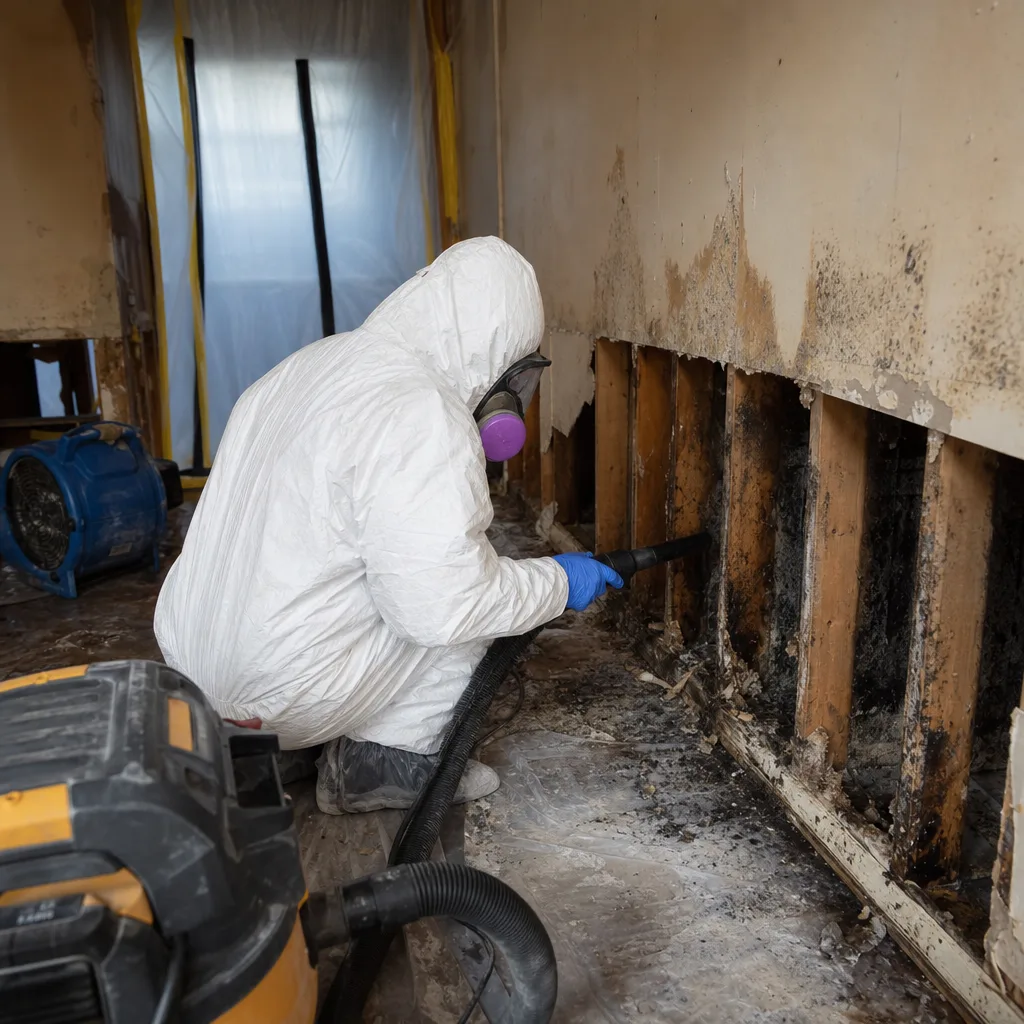
The Sand Section, from 19th Street north to the city limit and west of Highland Avenue, packs $4-$8 million homes onto 30×90 foot lots with below-grade garages, rooftop decks, and premium finishes that push restoration costs to $85-$140 per square foot. Our crews know the narrow alley access routes and the parking constraints that require equipment staging on The Strand or adjacent streets. Mold here typically colonizes behind bathroom tile on the second and third floors, where marine-layer humidity condenses against cooled surfaces, or in garage ceiling assemblies after overwash events.
The Tree Streets - Elm, Oak, Palm, Pine - retain pre-war bungalows with original wood framing and aging galvanized plumbing that fails predictably at threaded joints. Crawl spaces in these homes sit close to the water table and receive minimal ventilation; we treat them with sub-membrane dehumidification and vapor barrier installation distinct from the cavity-drying approach used in Sand Section’s slab-on-grade garages.
The Hill Section rises east of Sepulveda Boulevard with larger lots and 1920s-1940s Spanish Colonial revivals featuring clay tile roofs and plaster wall systems. Roof leaks here saturate lathe and plaster rather than drywall, requiring different drying protocols and longer moisture equilibration times. We’ve found that clay tile underlayment failure after Santa Ana wind events drives seasonal moisture intrusion patterns specific to this elevation.
East Manhattan Beach and the commercial corridors along Rosecrans Avenue see more mixed-use buildings and townhome developments from the 1980s-2000s with polybutylene plumbing and flat-roof assemblies. Mold in these properties typically traces to roof drain failures and chronic parapet wall leaks rather than coastal overwash or marine-layer condensation.
Specialized Mold Remediation Services We Offer in Manhattan Beach
Mold Inspection & Testing
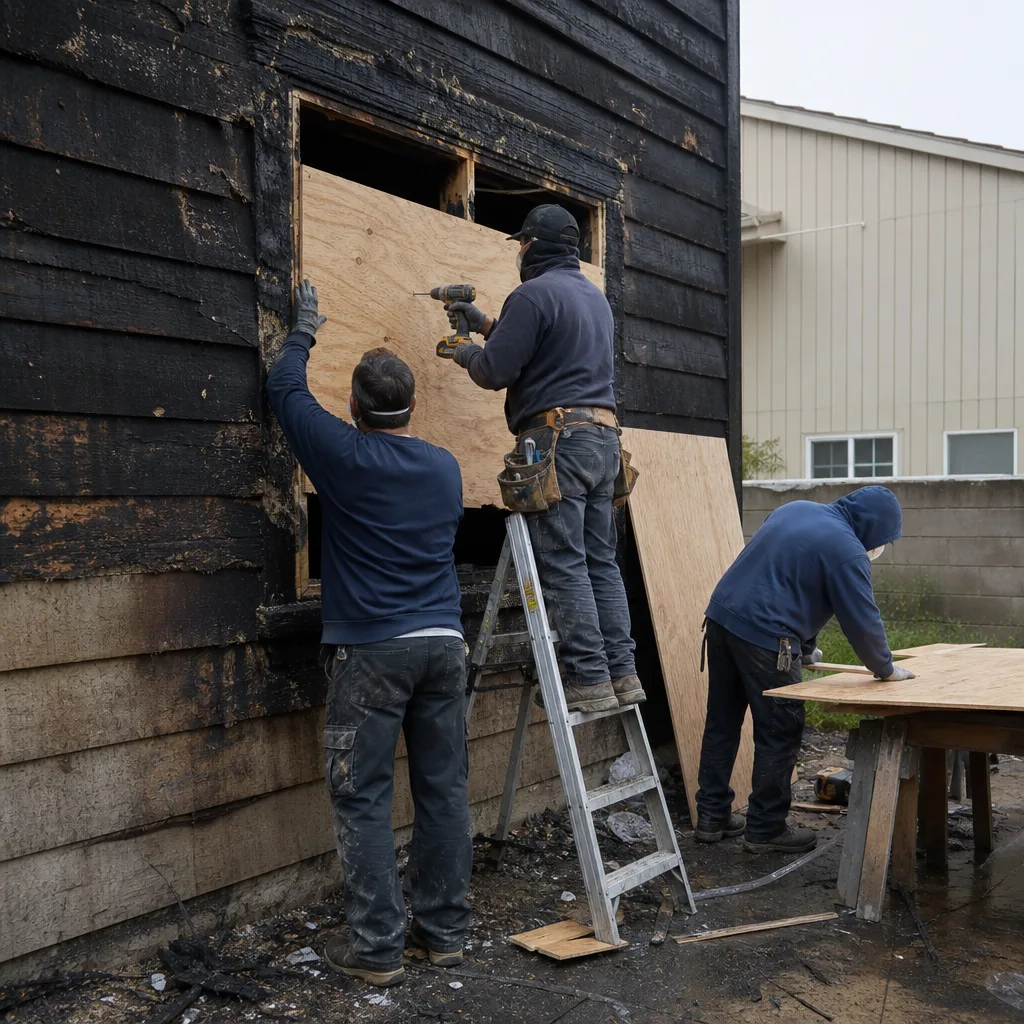
We begin with moisture mapping, thermal imaging, and air sampling analyzed by independent laboratories - not in-house kits. In Manhattan Beach, we specifically test for salt-air corrosion indicators on HVAC and electrical systems, since pitted components create chronic moisture sources that standard mold inspections miss. A typical inspection in Manhattan Beach runs $450-$850, with third-party lab results delivered within 48 hours.
Mold Removal
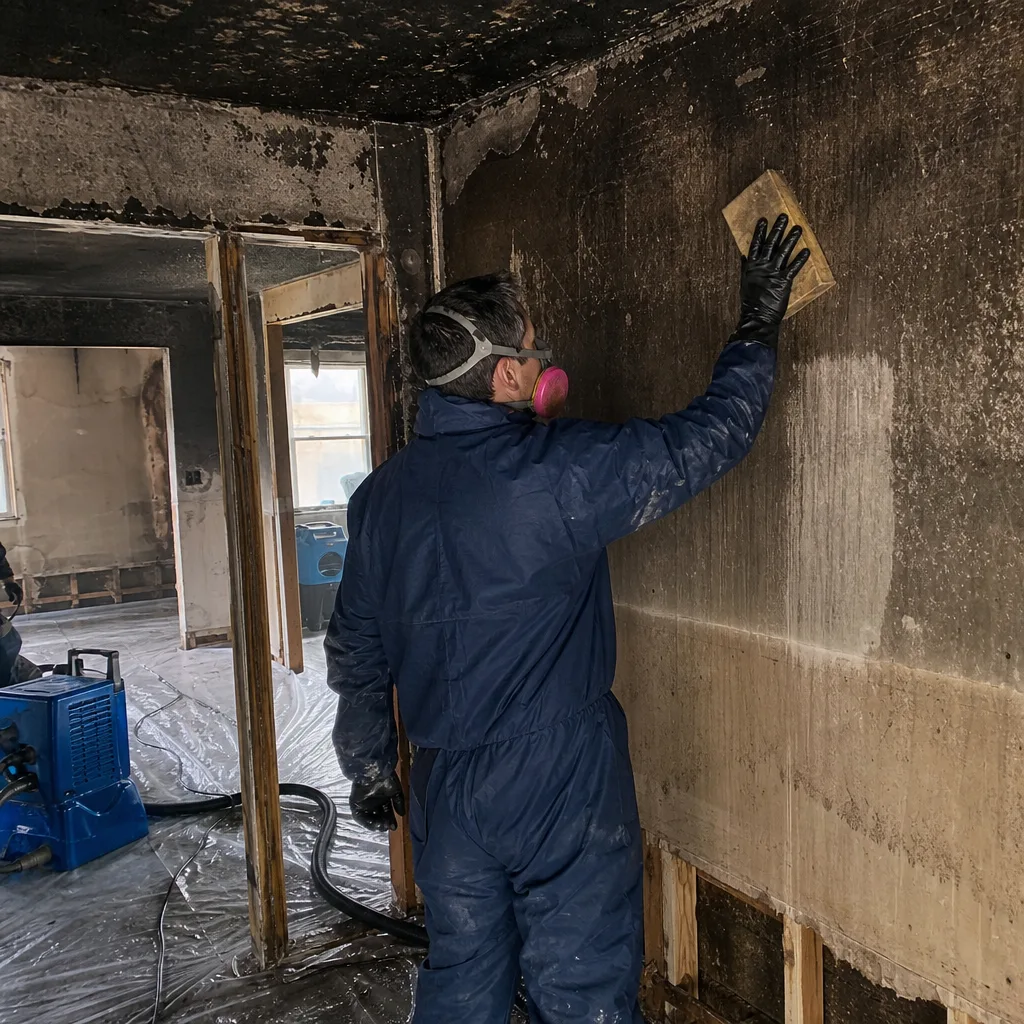
Our removal protocol follows IICRC S520 standards for containment, negative air pressure, and disposal of contaminated porous materials. Sand Section removals often require marine-grade component replacement as part of the scope, not an afterthought. Category 2 removal in a typical Sand Section garage and stairwell assembly runs $3,200-$5,800.
Black Mold Remediation
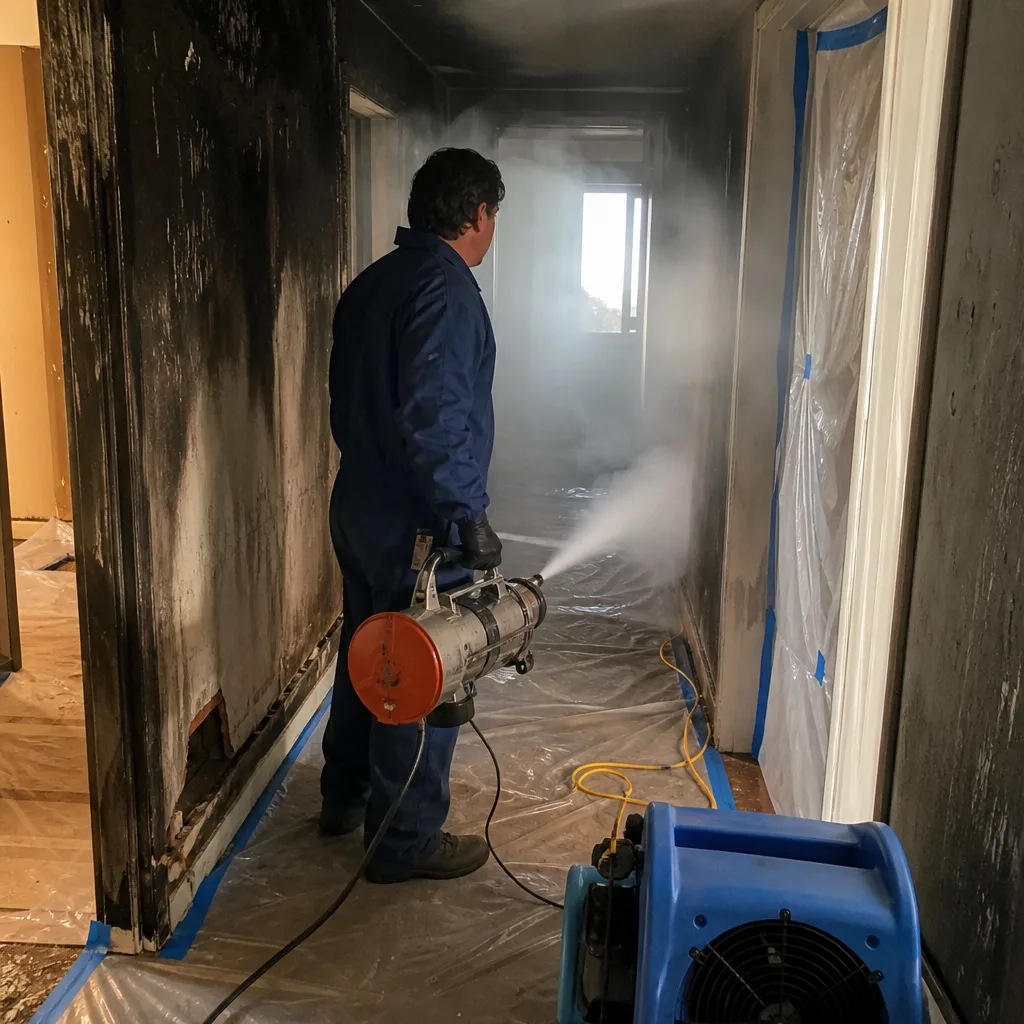
Stachybotrys chartarum and other toxigenic species require enhanced containment with full-face respirator protocols and double-bag disposal procedures. We do not speculate on species from visual inspection alone; laboratory identification determines the containment tier. Manhattan Beach’s chronic humidity makes black mold colonization behind water-damaged drywall more common than in inland climates.
Air Quality Restoration
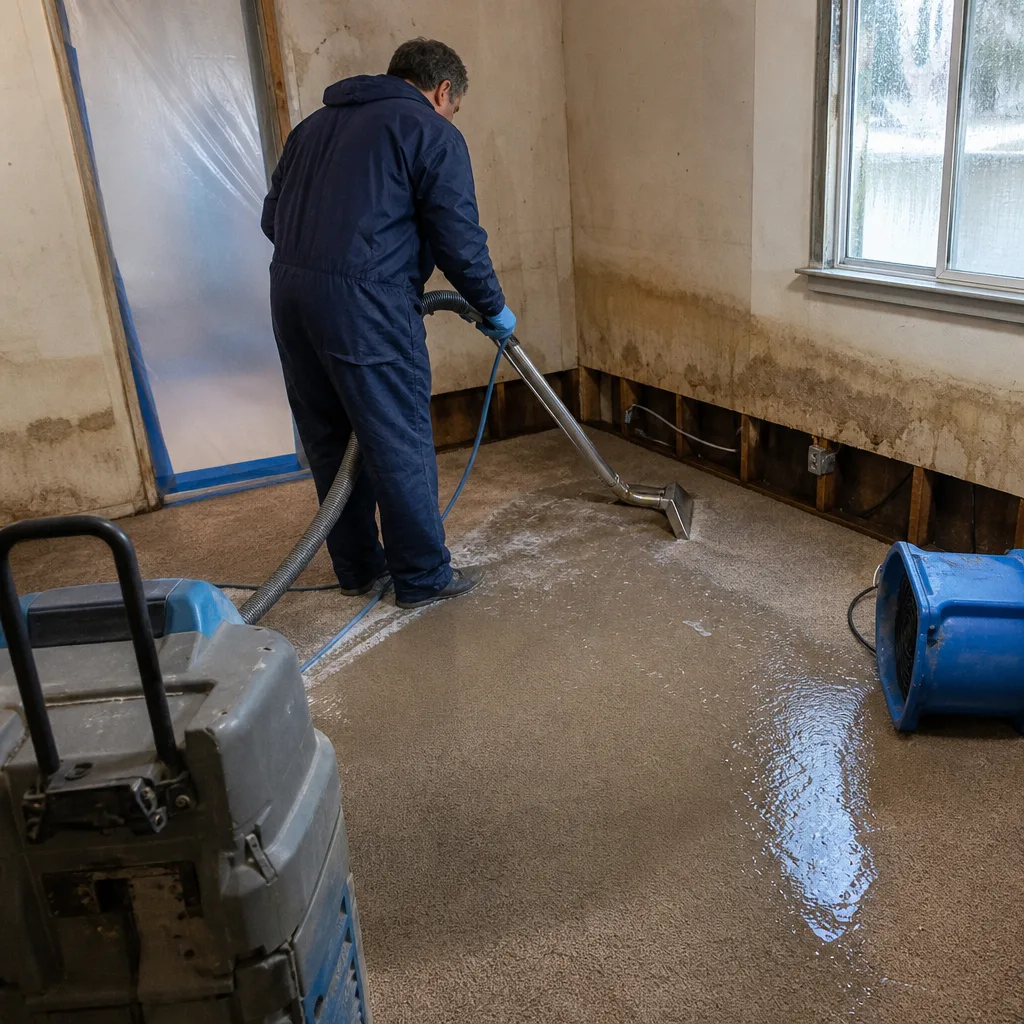
Post-remediation, we deploy HEPA air scrubbers and measure particulate counts with laser particle counters until readings fall below 0.03 mg/m³. For Sand Section homes with ongoing marine-layer humidity, we recommend permanent dehumidification systems sized to the cubic volume and air exchange rate.
Crawl Space Treatment
Tree Streets and Hill Section bungalows benefit from sub-membrane dehumidification, vapor barrier installation to 6-mil polyethylene standards, and conditioned crawl space conversion where feasible. These older homes were built without moisture management; modern remediation must add what the original construction omitted.
Moisture & Humidity Control
We install and monitor whole-home and targeted dehumidification systems, with remote humidity alerting for seasonal properties. In Manhattan Beach, humidity control is not a comfort issue; it is structural preservation, given the year-round marine layer that keeps interior relative humidity above 60% even without rain.
What happens when you call
- 1
A real person answersNo phone trees - you reach a local pro.
- 2
You get an upfront price rangeHonest numbers before anyone is dispatched.
- 3
A background-checked tech heads outLicensed & insured, dispatched right away.
- 4
You approve before work beginsNothing starts until you say go.
Mold Remediation Costs in Manhattan Beach, CA
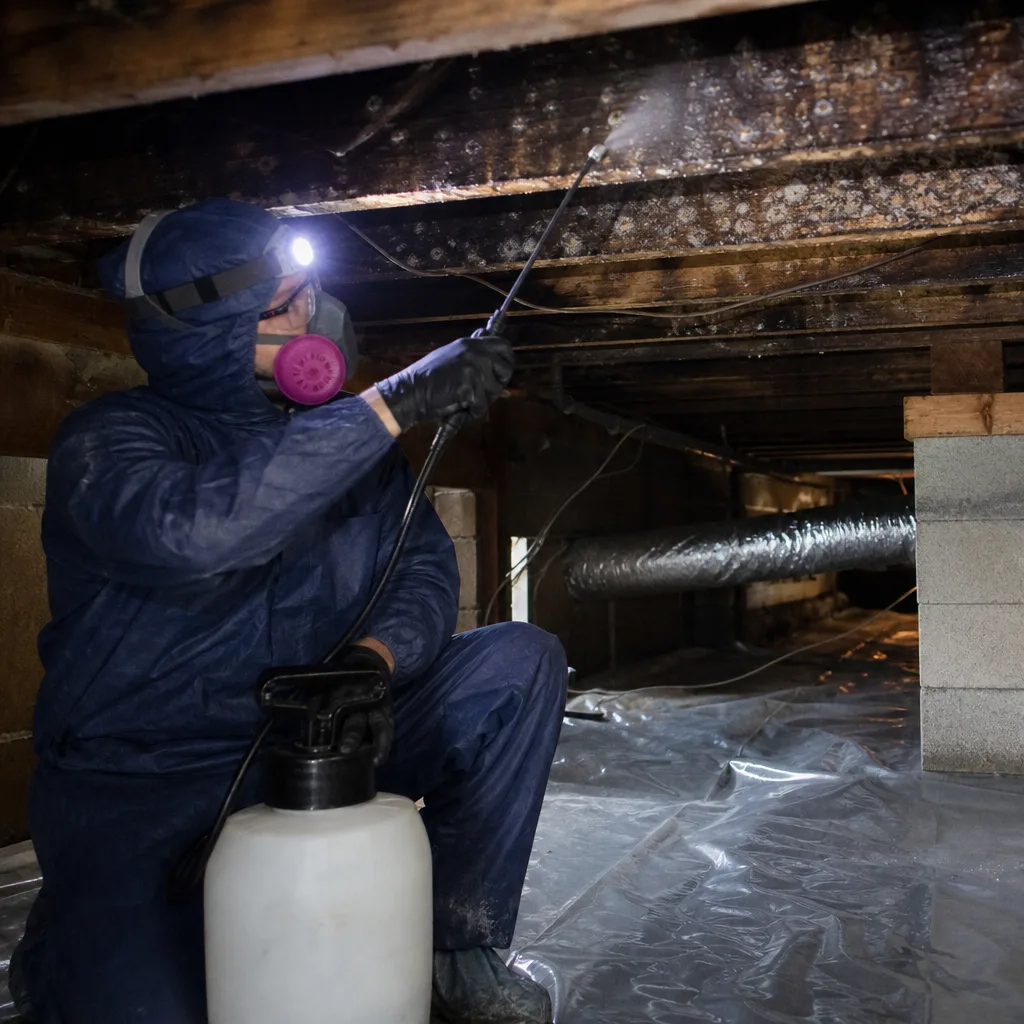
A typical contained mold remediation in Manhattan Beach runs $2,800-$4,500 for under 100 square feet of Category 1-2 contamination with standard drywall and flooring replacement. Category 3 whole-structure events in Sand Section three-story homes, including marine-grade HVAC and electrical component replacement, range $8,500-$18,000 depending on affected square footage and finish quality. Crawl space treatment in Tree Streets bungalows typically falls at $4,200-$7,800 with vapor barrier and dehumidification installation.
What moves the price: finish quality (restoring $400/sqft Sand Section interiors vs. standard Hill Section bungalows), marine-grade component replacement requirements, containment complexity in multi-story narrow-lot builds, and whether third-party clearance testing is required. Insurance covers sudden and accidental water damage with resulting mold when documented promptly; chronic humidity-driven colonization without a covered water loss typically falls to homeowner out-of-pocket. We provide a free visual inspection and written scope before any work begins - Haven Standard, Clause 1 - and we offer a Free Second Opinion on any competitor’s written estimate.
We Also Serve Cities Near Manhattan Beach
Our crews respond throughout the South Bay, including Manhattan Beach and neighboring Mold Remediation service areas: Hermosa Beach, where Strand-front properties share Sand Section’s salt-air corrosion patterns; El Segundo, with its aerospace-era housing stock and distinct industrial contamination risks; Lawndale, where post-war tract homes face different moisture management challenges; and Hawthorne, with mixed-age housing and higher density rebuild scenarios. Each city’s page details the local conditions that shape remediation scope and pricing there.
Serving Manhattan Beach, CA - Our Local Coverage Area
We’re based in the Manhattan Beach area and know this community well. Use the map below to see our service coverage - if you’re nearby, we can almost certainly help.
Manhattan Beach Mold Remediation Questions, Answered
How fast does mold start growing in a Manhattan Beach home after coastal water gets into a below-grade garage?
Mold colonization begins 24-48 hours after water intrusion in Manhattan Beach’s climate, faster than inland areas because the persistent marine layer keeps ambient humidity high enough that surfaces never fully dry without mechanical dehumidification. In Sand Section garages, we’ve measured active growth behind drywall within 36 hours of El Niño overwash. Call (424) 372-0129 for immediate dispatch - every hour of delay expands the containment perimeter and the final scope.
Why does mold keep coming back in Sand Section homes even after professional remediation?
The recurrence typically traces to untreated salt-air corrosion of HVAC condenser coils and electrical panels, not failed remediation. Pitted components create chronic moisture through condensation and minor electrical faults; unless these are replaced with marine-grade coated parts, the moisture source persists and reactivates spores seasonally. Our Sand Section protocol includes corrosion audit and marine-grade replacement as standard, not optional. Call (424) 372-0129 for an inspection that identifies the true source.
What should we check on a narrow three-story Manhattan Beach home before an El Niño storm cycle?
Verify garage door seals and threshold drainage, inspect ground-floor entry door weatherstripping, confirm HVAC condensate lines are clear and corrosion-free, and check that rooftop deck drains flow freely to street drainage rather than backing into wall assemblies. We offer pre-season moisture audits in September and October for Sand Section properties. Call (424) 372-0129 to schedule.
Do you treat crawl spaces in the older Tree Streets and Hill Section bungalows differently than new Sand Section builds?
Yes. Tree Streets and Hill Section crawl spaces require sub-membrane dehumidification and vapor barrier installation because these homes were built without moisture management systems and sit closer to the water table. Sand Section’s newer construction typically uses slab-on-grade garages with cavity-drying through Injectidry systems rather than crawl space protocols. The equipment, timeline, and cost structure differ substantially. Call (424) 372-0129 for a scope specific to your home’s construction era.
Will a mold remediation in a Manhattan Beach home include replacing the corroded HVAC and electrical parts, or just cleaning the mold?
Our Manhattan Beach scopes include marine-grade replacement of corroded components when they are identified as the chronic moisture source driving colonization. Cleaning mold without addressing the corrosion violates IICRC S520 source-removal principles and guarantees recurrence. The replacement scope is itemized in your written price before work begins - Haven Standard, Clause 1. Call (424) 372-0129 for an inspection that identifies whether corrosion is in play.
How long does full mold remediation take in a typical Manhattan Beach home?
Contained Category 1-2 remediation completes in 3-5 days of active work plus 24-48 hours of clearance testing. Category 3 whole-structure events in Sand Section multi-story homes require 7-14 days with marine-grade component replacement adding 2-3 days to the schedule. Drying logs document daily progress; we do not request reconstruction approval until moisture readings confirm tertiary drying is achieved.
Can our family stay in the home during mold remediation?
Occupants typically relocate during Category 3 remediation and during any toxigenic species containment, due to negative air pressure equipment noise and the psychological stress of visible containment barriers. Category 1-2 remediation in isolated areas may allow occupancy with HVAC isolation, though we recommend temporary relocation for sensitive individuals. We discuss occupancy constraints in your written scope before work begins.
What certifications do your mold remediation technicians hold?
Our lead technicians hold IICRC AMRT (Applied Microbial Remediation Technician), WRT (Water Damage Restoration Technician), and FSRT (Fire & Smoke Restoration Technician) credentials where cross-contamination scenarios apply. All work is documented to IICRC, RIA, and IFA standards with daily moisture logs and photo records included as standard deliverables, never upsells. Call (424) 372-0129 to verify current credentials for your assigned crew.
Back to Dry Restoration, led by Alicia Brennan, has operated under The Haven Standard since 2011. Every job is quoted in writing before work begins, documented with a photo record on every visit, and covered by the 365-Day Done Right Promise. Our Mold Remediation team serves Manhattan Beach from our Los Angeles dispatch office with crews minutes away from the Sand Section, Tree Streets, and Hill Section. Call (424) 372-0129 - a live person answers 24 hours a day - for your free visual inspection and written scope.
Written by Alicia Brennan, Owner at Back to Dry Restoration, serving Manhattan Beach since 2011 under The Haven Standard.