
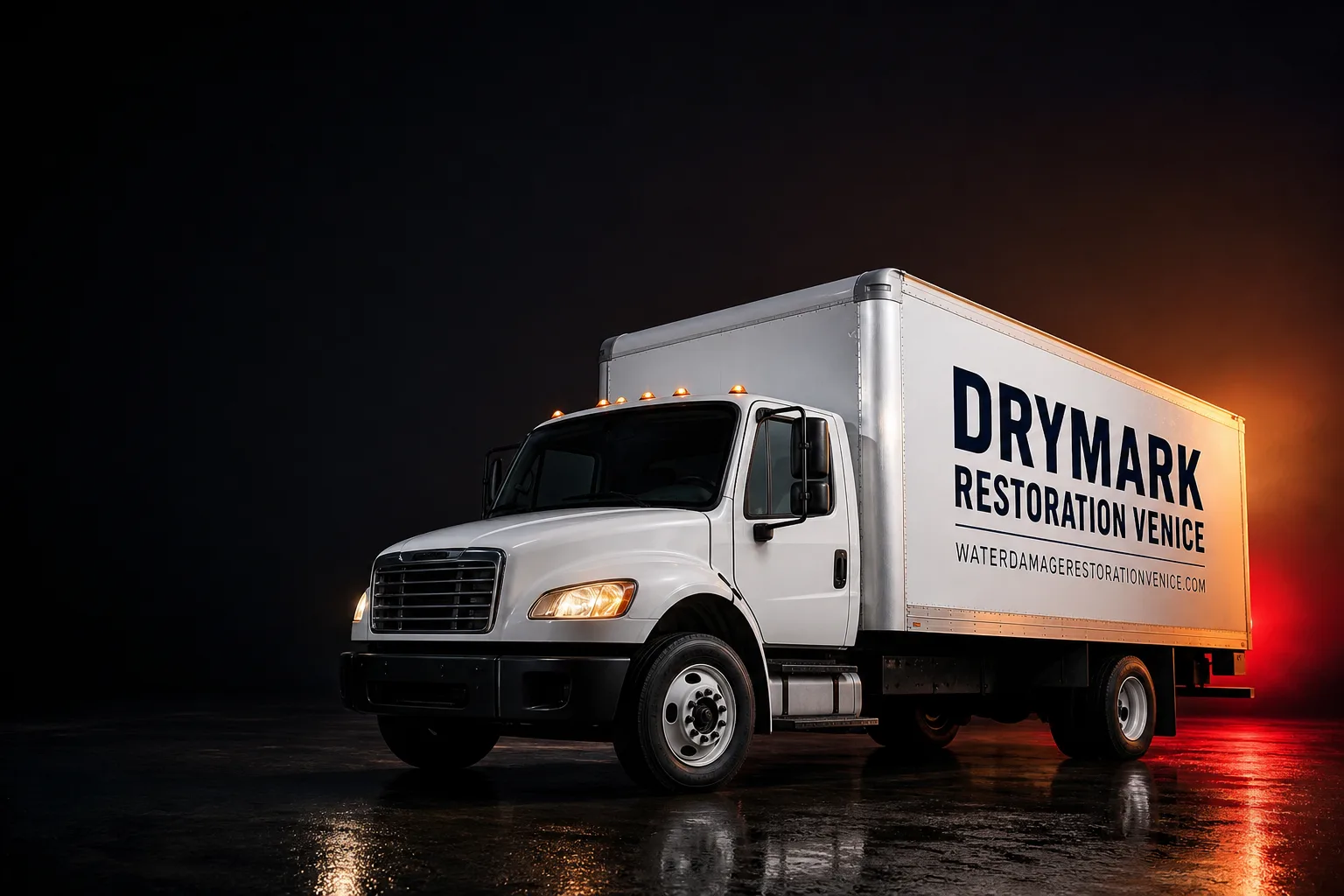
Free visual inspection and a written scope of work before any mitigation begins - photos, moisture readings, and drying logs go in your claim file
The scope we write is the scope we bill. Anything new gets shown to you, in writing, before we touch it.
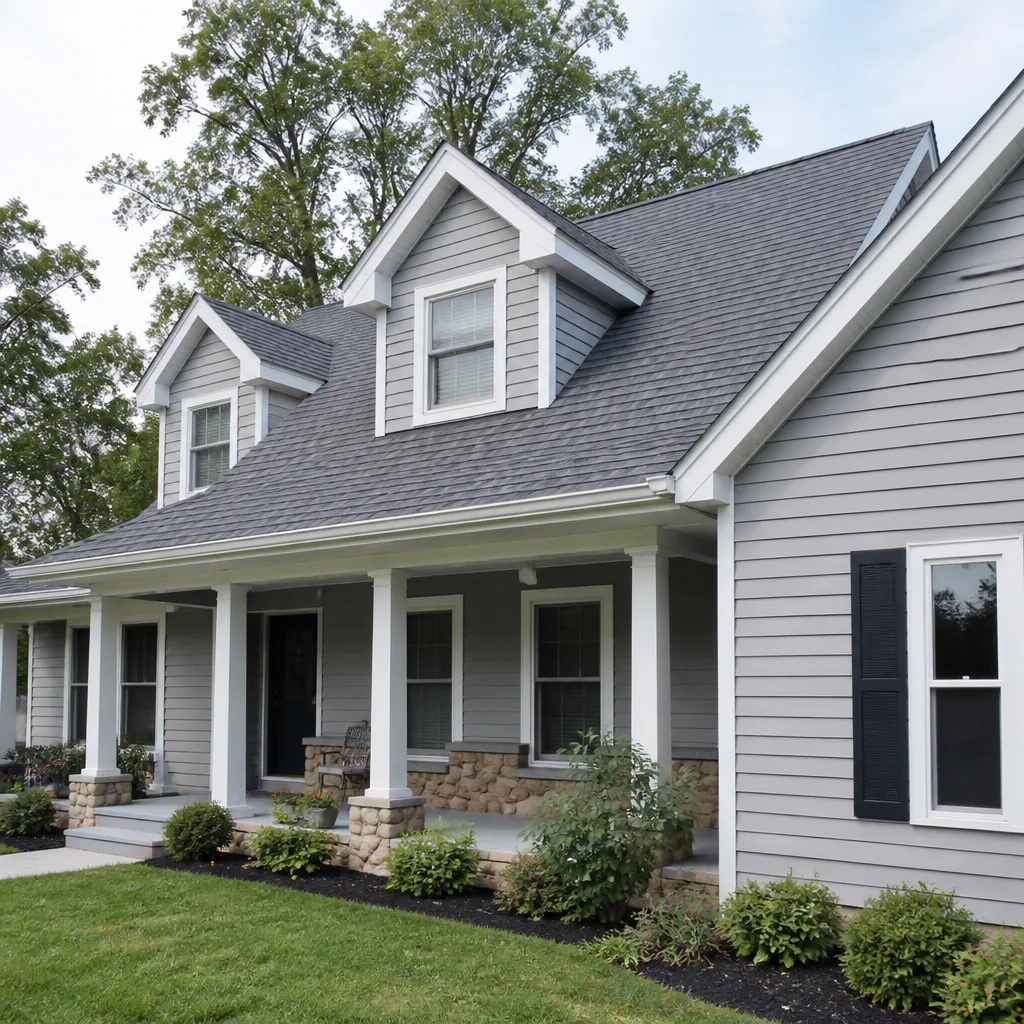
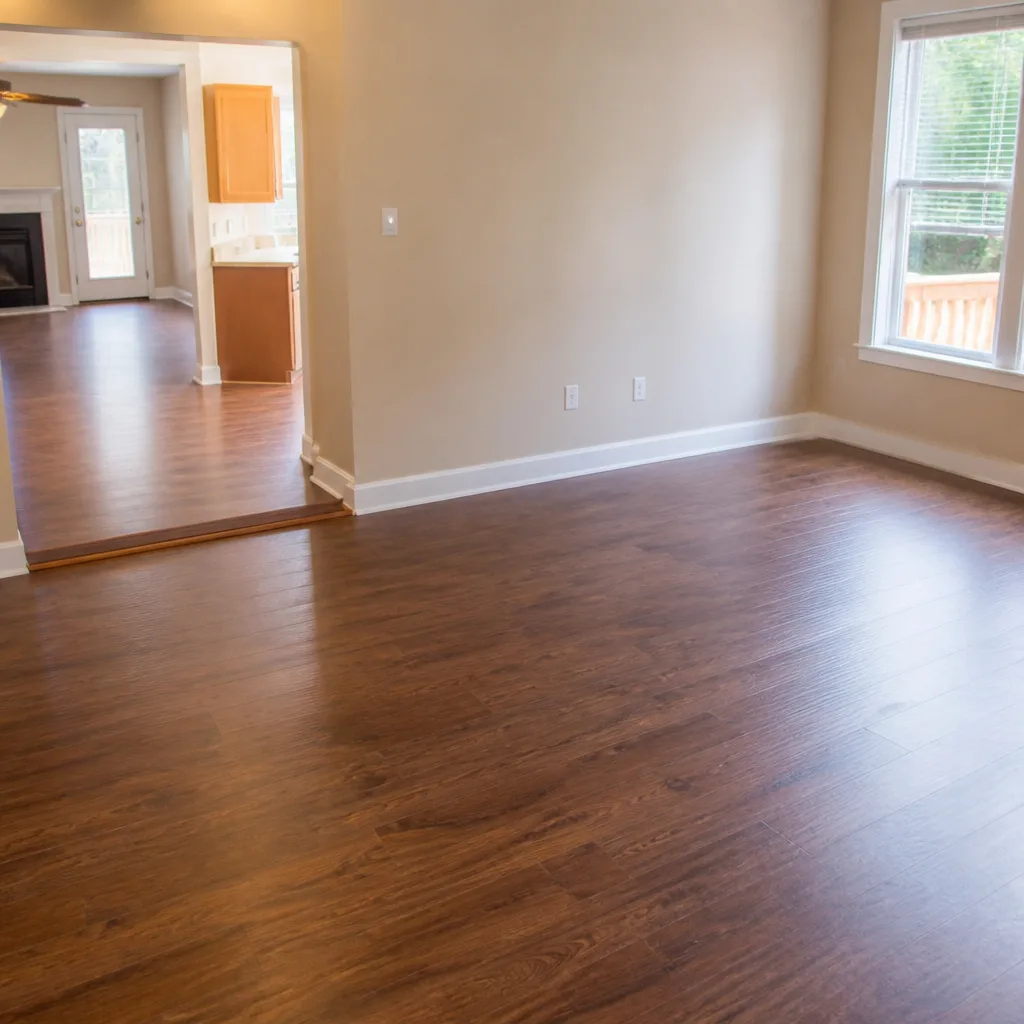
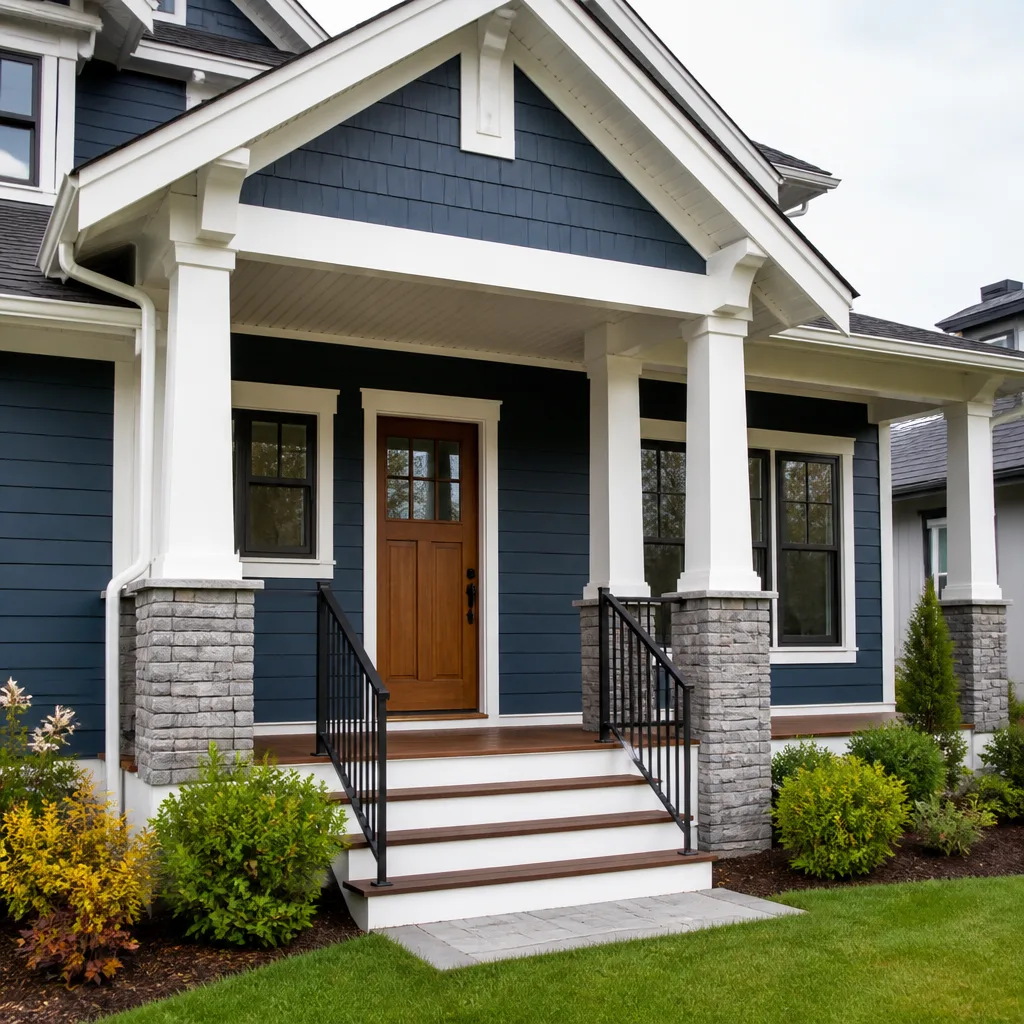
 Before
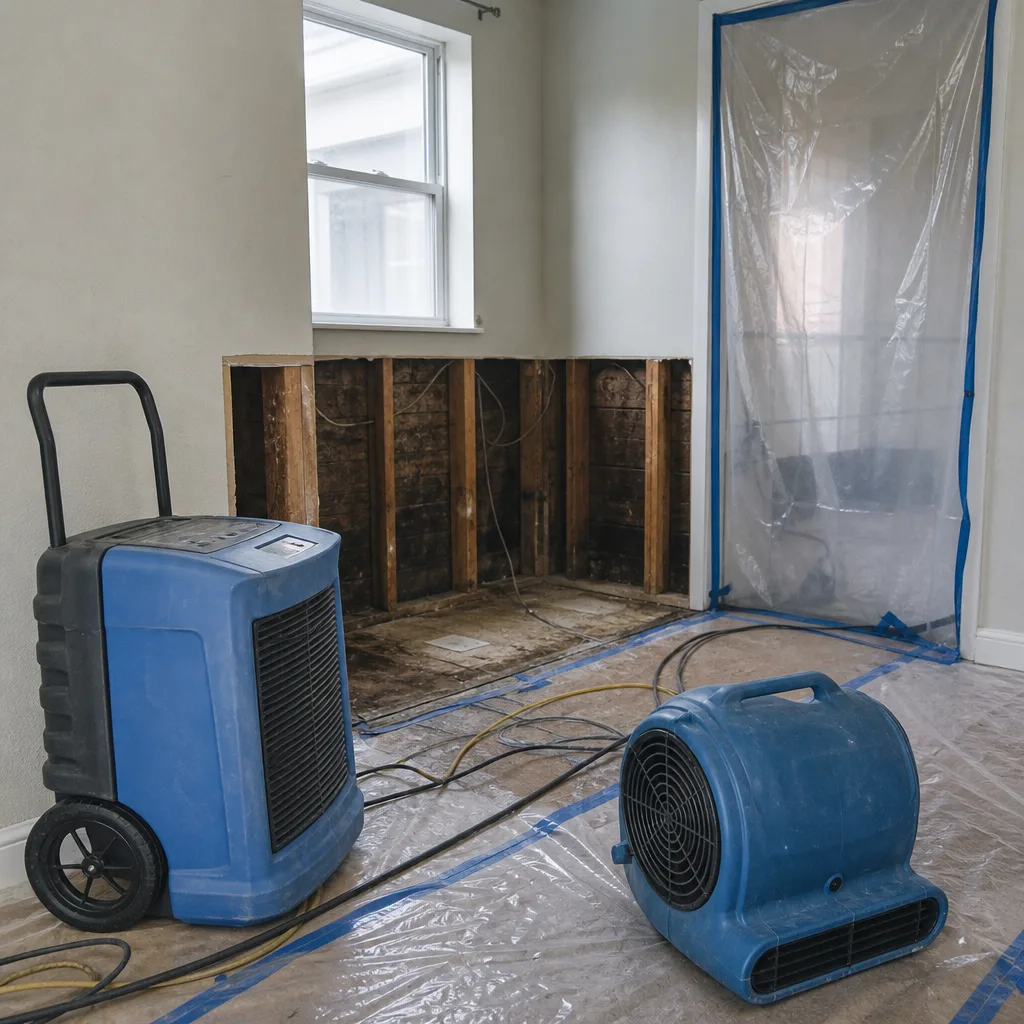 After
After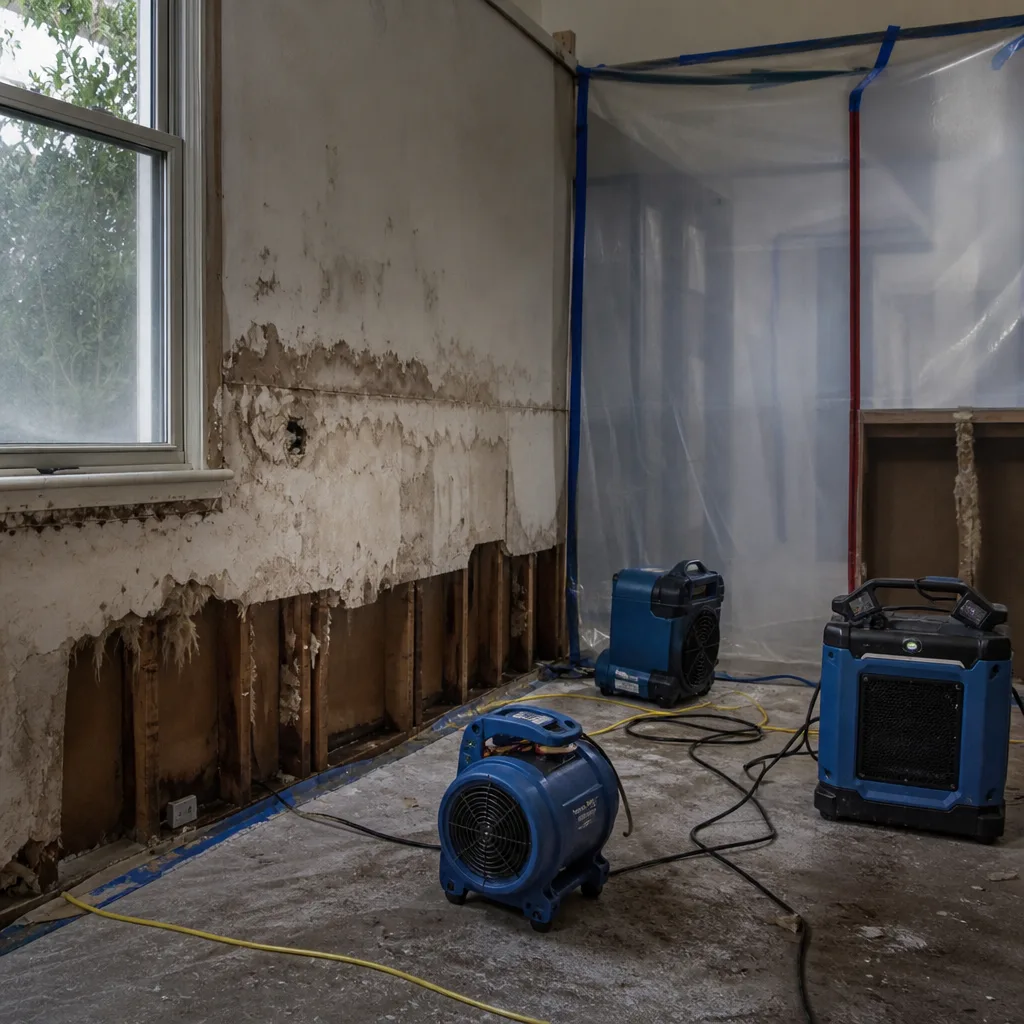 Before
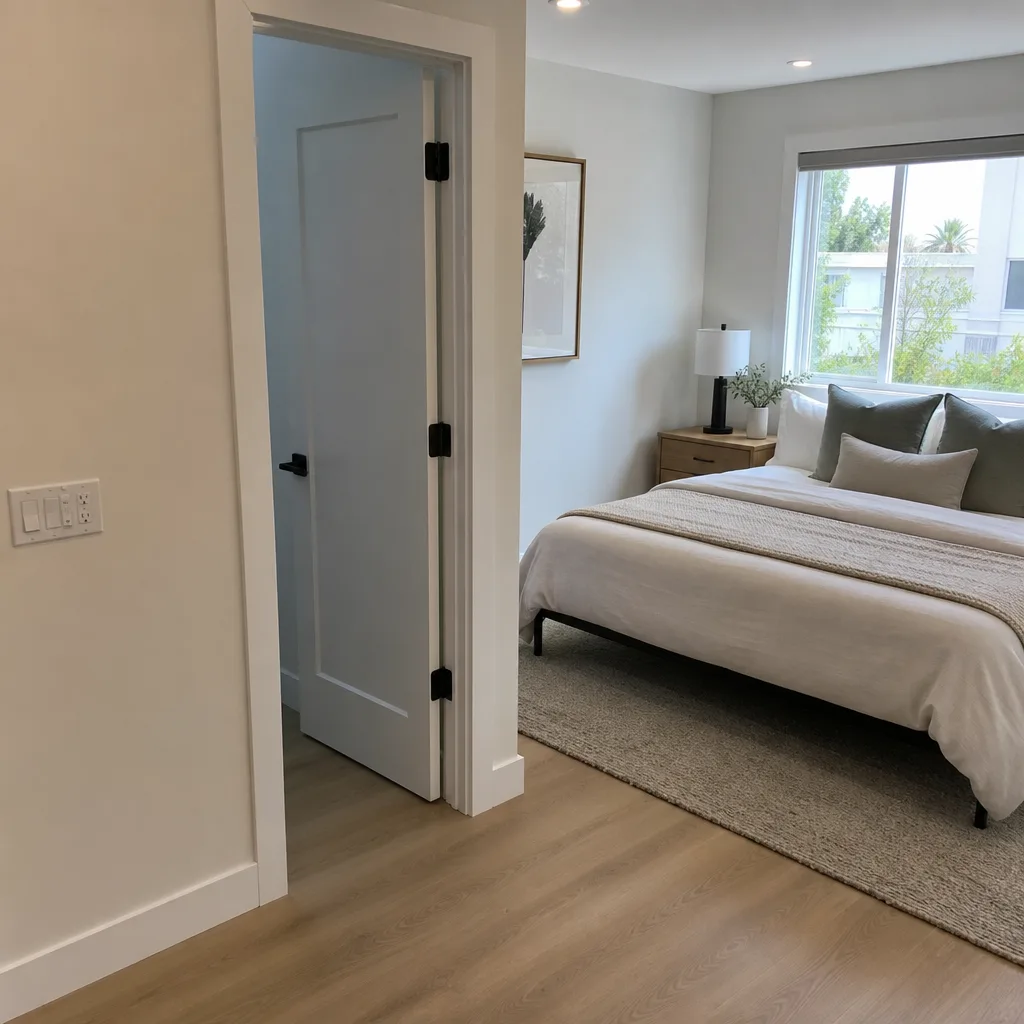 After
After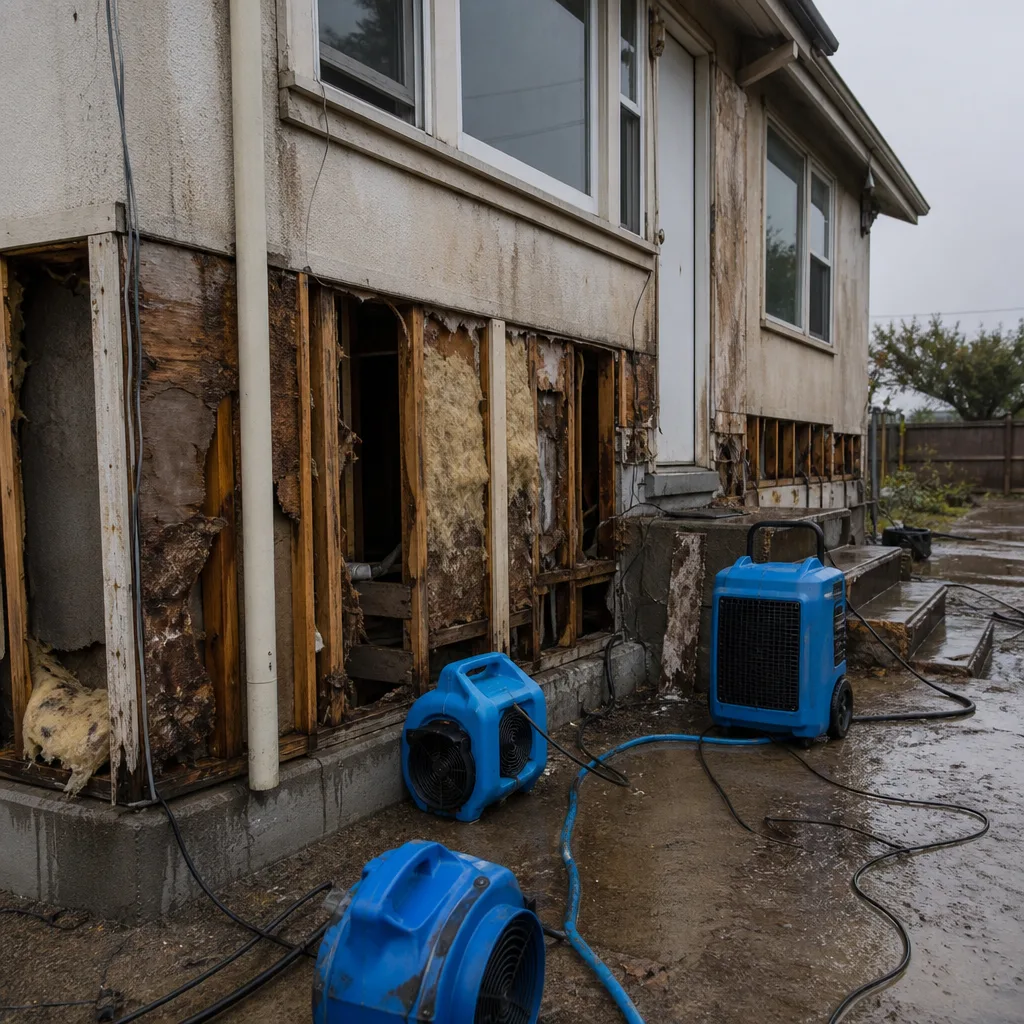 Before
 After
After24/7 Emergency Water Damage Restoration in Manhattan Beach
Water damage restoration in Manhattan Beach typically costs $2,800-$7,500 for residential jobs, with emergency extraction starting at $950 and full structural drying running $1,800-$4,200 depending on affected square footage and material classification. Our crews answer live at (424) 372-0129 twenty-four hours a day, seven days a week - no voicemail, no callback queues. When water is still moving through your property, the first sixty minutes determine whether you’re looking at extraction and drying or full gut-and-rebuild work. We dispatch from our Los Angeles office to Manhattan Beach addresses with a forty-five-minute response commitment on emergency calls, and every job starts with a free visual inspection and a written scope before any equipment is powered on.
Understanding Water Damage Restoration Severity in Manhattan Beach Properties
Water damage in Manhattan Beach falls into three categories under IICRC standards, and the distinction matters for both health outcomes and insurance coverage. Category 1 water - clean water from a burst supply line or failed water heater - degrades to Category 2 within forty-eight hours of contact with building materials. Category 2, or “gray water,” carries chemical or biological contaminants; in Manhattan Beach, this is what we find when the marine layer drives moisture through corroded garage-door seals into below-grade spaces, or when El Niño overwash breaches The Strand properties. Category 3, “black water,” includes sewage intrusion and seawater flooding - the latter increasingly relevant for Sand Section homes during extreme high-tide events.
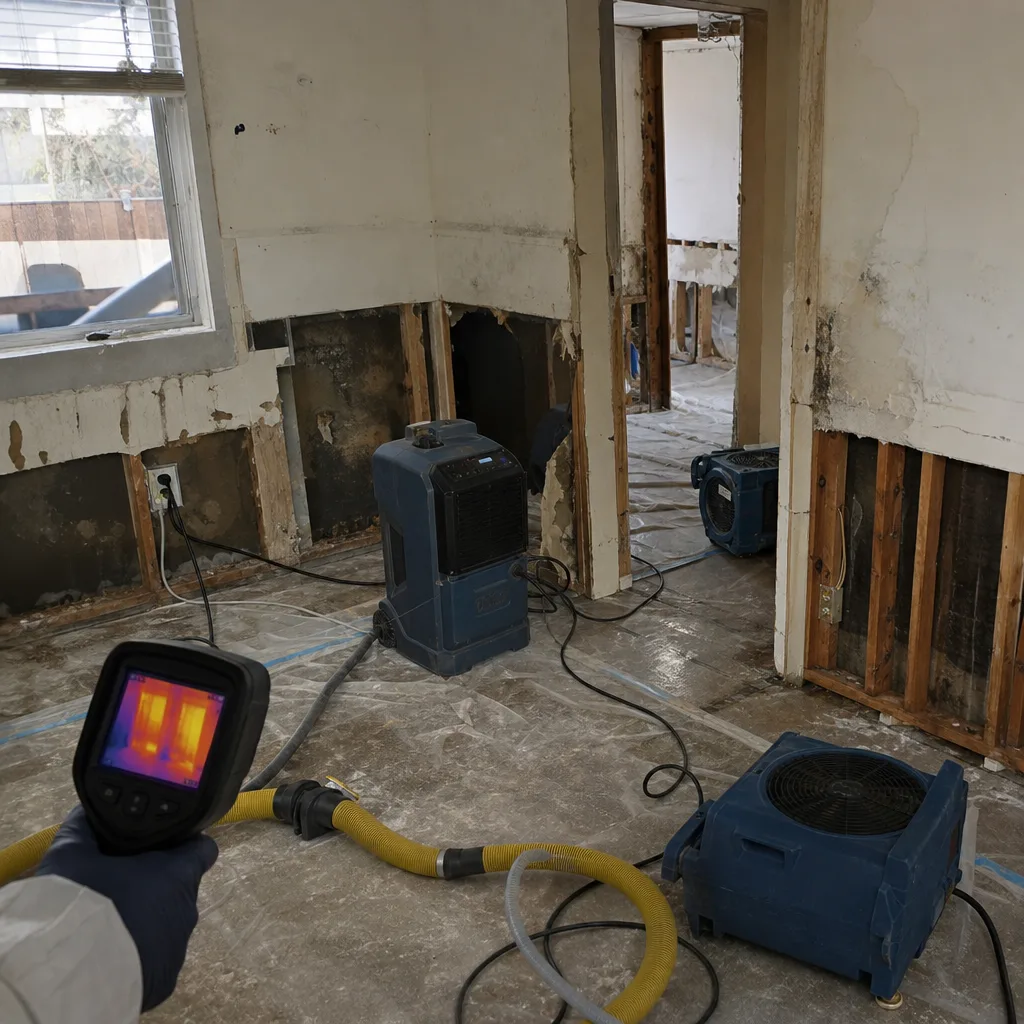
Moisture mapping with thermal imaging and calibrated hygrometers tells us what the eye cannot: how far water has wicked up drywall, whether subfloors are saturated beneath apparently dry tile, and if vapor pressure differentials are driving hidden condensation into wall cavities. In the Tree Streets, we regularly encounter 1920s-era galvanized plumbing that has thinned from interior corrosion; when these lines fail behind original lath-and-plaster, the moisture reading at the baseboard may read normal while the sill plate behind it registers twenty-two percent wood moisture content - well into the fungal growth range. The narrow three-story builds of the Sand Section present their own psychrometric puzzle: stacked floor plates with minimal mechanical chase space mean water travels vertically through utility penetrations faster than it spreads laterally, requiring tertiary drying protocols that address interstitial spaces, not just visible surfaces.
Why Manhattan Beach Property Owners Choose DryMark Restoration Venice
- Forty-five-minute response commitment to Manhattan Beach addresses - because standing water doesn’t wait for business hours and neither do we.
- Live person answers every call, 24/7 - no automated attendant, no “press one for emergencies” while your garage floods.
- IICRC-certified crews holding WRT (Water Damage Restoration Technician), ASD (Applied Structural Drying), and AMRT (Applied Microbial Remediation Technician) credentials - the specific training that determines whether your drying log satisfies a claims adjuster.
- Free visual inspection with moisture readings documented before any work is proposed or priced.
- Direct insurance billing with photo-documented scopes written to Xactimate standards, submitted to your adjuster, not dumped in your lap.
- One team from extraction to reconstruction - no handoffs between mitigation contractors and rebuild crews, no gaps in documentation.
 Before
 After
AfterOur Water Damage Restoration Process
1. Inspection & Assessment
We arrive with thermal imaging cameras, penetrating and non-penetrating moisture meters, and hygrometers to map the full extent of water migration - not just what you can see. In Manhattan Beach’s Sand Section, this includes checking for salt-air corrosion damage to garage-door hardware that may have compromised the seal and allowed water intrusion. You receive a written scope with line-item pricing before any work begins.
2. Extraction & Stabilization
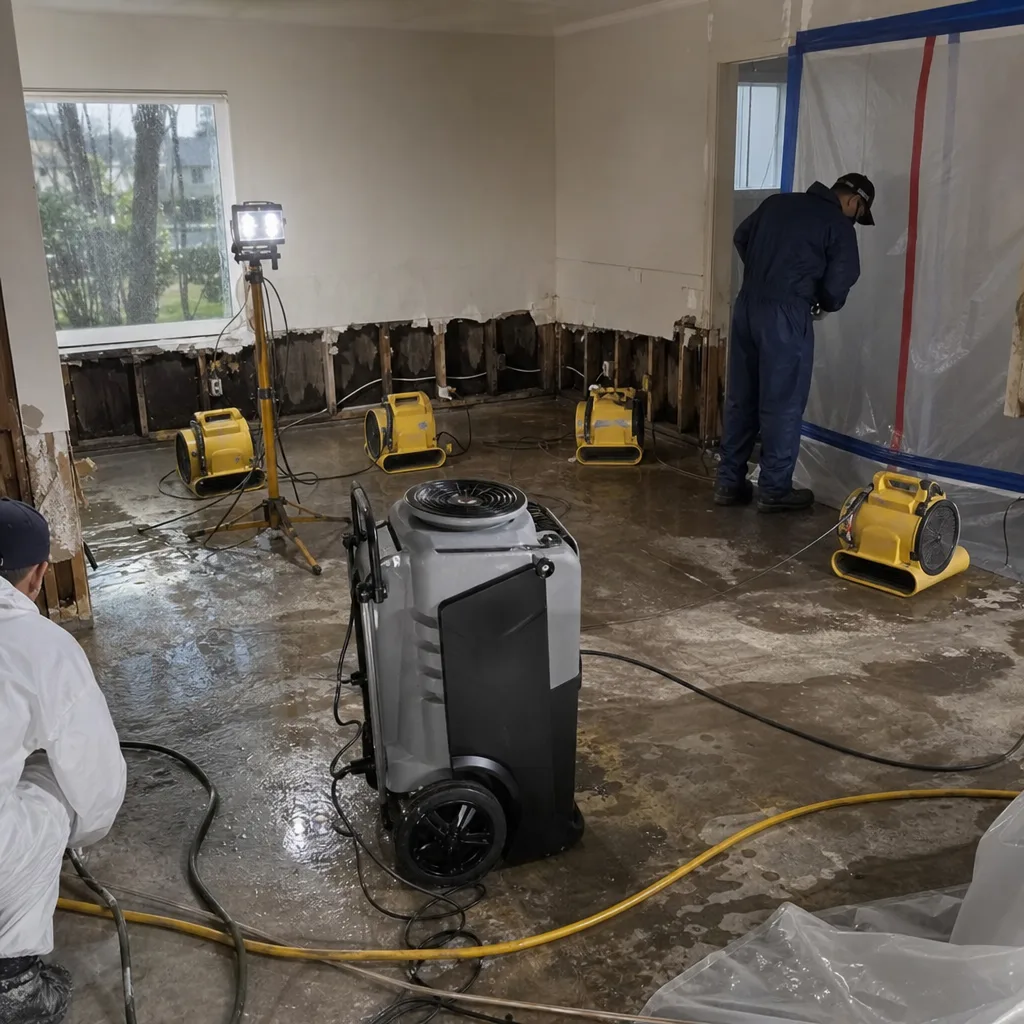
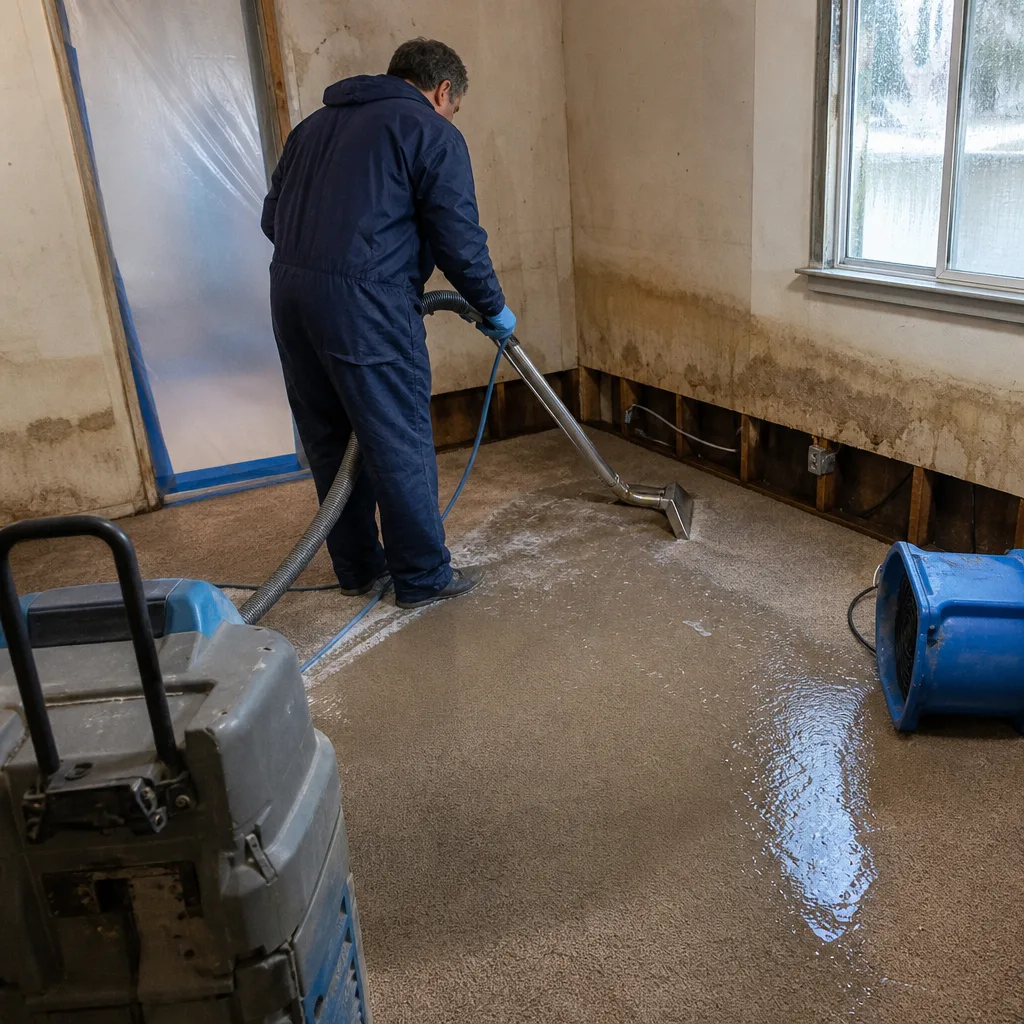
Truck-mounted and portable extraction units remove standing water from floors, carpets, and subfloors. For below-grade garages common in Sand Section three-story builds, we deploy submersible pumps and weighted extraction wands to pull water from concrete pores before it wicks into framing. Containment barriers go up immediately to prevent cross-contamination.
3. Drying & Dehumidification
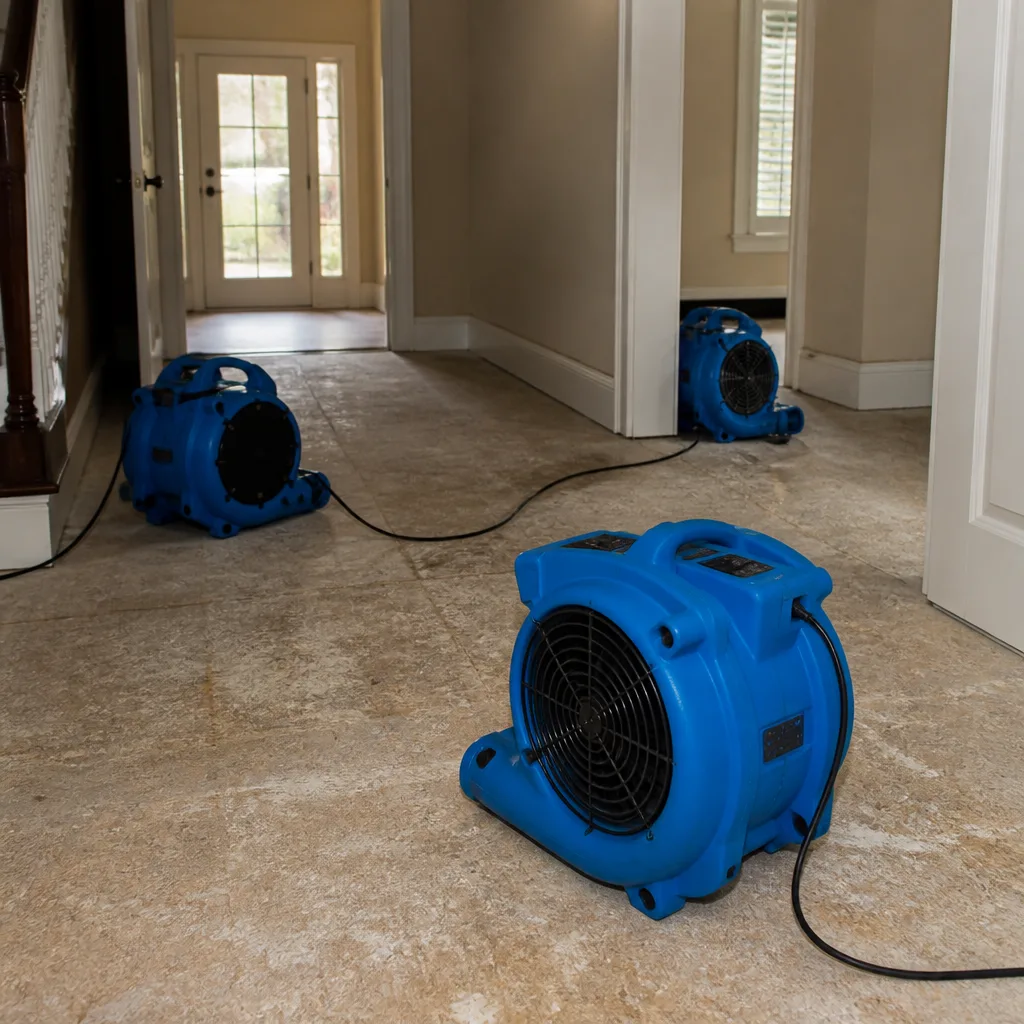
We calculate the specific psychrometric load of your space - temperature, relative humidity, and vapor pressure - then deploy LGR dehumidifiers from Dri-Eaz and Phoenix, axial and centrifugal air movers from XPOWER, and when wall cavities are affected, Injectidry interstitial drying systems that force dry air through enclosed spaces without demolition. Daily moisture readings are logged to IICRC standards.
4. Cleaning & Sanitization
All affected surfaces receive antimicrobial treatment appropriate to the water category. In Manhattan Beach, where marine-layer humidity sustains fungal growth even without active leaks, we apply botanical-based antimicrobials that don’t trigger the chemical sensitivities common in high-end finishes found throughout the Hill Section.
5. Corrosion Inspection & Marine-Grade Hardware Replacement
This is where our Manhattan Beach work diverges from standard inland protocols. We inspect garage-door springs, hinges, rollers, tracks, and fasteners for salt-air corrosion - the chronic environmental attack that causes repeat water intrusion when failed hardware leaves doors ajar during storms. Where corrosion is found, we specify galvanized coated springs and stainless steel hardware rated for marine exposure, documented in your scope.
6. Repairs & Restoration
Our reconstruction crew returns finished spaces to pre-loss condition using materials matched to existing specifications. For Sand Section homes with premium finishes, we source equivalent-grade materials and document every selection for your insurance file. The job closes with a signed 365-Day Done Right Promise under The Haven Standard.
Need Emergency Water Damage Restoration in Manhattan Beach Now?
Crews minutes away, answering live 24 hours a day. The sooner we start, the less it costs.
Working With Your Insurance Company
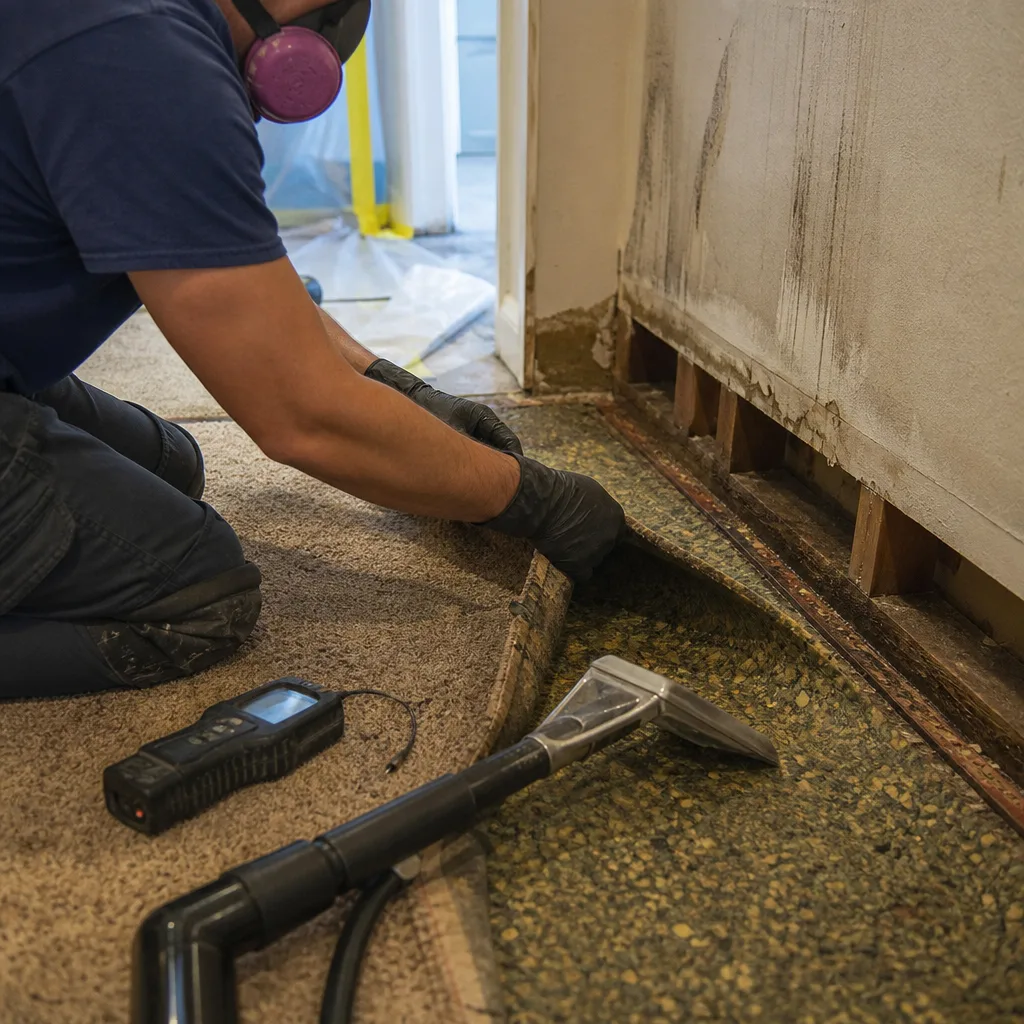
Insurance claims succeed or fail on documentation, and most water damage claims in Manhattan Beach fall under sudden and accidental coverage - but only if the cause and timeline are documented from hour one. Our field technicians photograph every room, every elevation, every material classification before anything is moved. Moisture readings are time-stamped and geotagged. Drying logs are updated daily with equipment placement maps, psychrometric data, and progress photographs. This isn’t extra service; it’s standard deliverable on every job.
We write scopes to Xactimate standards and communicate directly with your adjuster, not through you as intermediary. If your carrier disputes line items, we defend our documentation with the photo record and drying logs that back every charge. Haven Standard, Clause 1: written price before work begins. Haven Standard, Clause 4: documented photo record on every visit. These aren’t marketing promises; they’re the procedural backbone that turns restoration invoices into paid claims.
What We Provide Your Insurer
- Thorough documentation of the loss
- Photos of all damage, room by room
- Moisture readings and drying logs
- A detailed, line-item scope of work
- Direct coordination with your carrier
Built for Manhattan Beach’s Loss Calendar
January through March brings El Niño storm cycles that push coastal overwash across The Strand, flooding below-grade garages and ground-floor entries in Sand Section homes that have no natural drainage path back to the ocean. April to June, the marine layer thickens and persists inland past noon, keeping relative humidity above sixty percent in homes without adequate mechanical ventilation - the hidden mold season that produces more calls than burst pipes. July through September sees peak tourism and rental turnover, when absentee owners discover that a small leak left unaddressed has colonized an entire wall cavity. October to December, Santa Ana winds drive dry air that masks ongoing moisture problems until the next storm cycle begins.
The persistent Pacific marine layer is the baseline condition that shapes our Manhattan Beach work. Even without measurable rainfall, homes within three blocks of the beach experience chronic interior humidity that accelerates corrosion, sustains fungal growth, and degrades building materials years ahead of inland equivalents. Our drying protocols account for this: we don’t just dry to a generic standard, we dry to a standard that holds through the next marine-layer season.
Water Damage Restoration Across Manhattan Beach’s Neighborhoods
The Sand Section, roughly between Manhattan Beach Boulevard and the water, is where we encounter the most complex losses. Narrow thirty-by-ninety-foot lots support three-story builds with below-grade garages that function as subterranean basements in any other city - except these fill with sand-laden seawater during overwash events, and the salt content corrodes standard pumps and equipment if not flushed immediately. We maintain dedicated desalination-grade extraction capability for these calls. The Strand itself, the oceanfront walk, marks the zero-foot-elevation line where FEMA flood risk meets multi-million-dollar real estate; properties here require marine-grade replacement parts and coatings on every hardware component, or the identical failure recurs within two to three seasons.
The Hill Section, rising east of Highland Avenue, presents older construction - 1920s to 1940s Craftsman and Spanish Colonial bungalows with original wood framing and early copper or galvanized plumbing. These homes have survived nearly a century of marine exposure, but their plumbing hasn’t. We find pinhole leaks in copper lines and catastrophic failures in galvanized supply that have been thinning from the inside for decades. The Tree Streets - named for their pine, oak, and elm designations - share this vintage housing stock and the same vulnerability to chronic moisture infiltration through aging foundations and compromised crawl-space vents.
East Manhattan Beach, toward Aviation Boulevard and the commercial corridors, includes mid-century and newer construction with slab-on-grade foundations and modern plumbing, but also the highest concentration of flat-roof commercial and mixed-use buildings where HVAC condensate drains and roof membrane failures produce the category of slow, hidden leak that isn’t discovered until ceiling tiles sag. Each neighborhood demands different equipment configurations, different material specifications, and different documentation approaches for insurance - we don’t apply a single template across Manhattan Beach’s varied building stock.
Specialized Water Damage Restoration Services We Offer in Manhattan Beach
Emergency Water Extraction
Standing water in a Manhattan Beach home begins degrading category within hours and causes permanent damage to hardwood, drywall, and insulation within twenty-four. Our truck-mounted extraction systems remove thousands of gallons per hour, and for Sand Section garages with limited vehicle access, we deploy portable units through pedestrian entries. Call (424) 372-0129 for immediate dispatch.
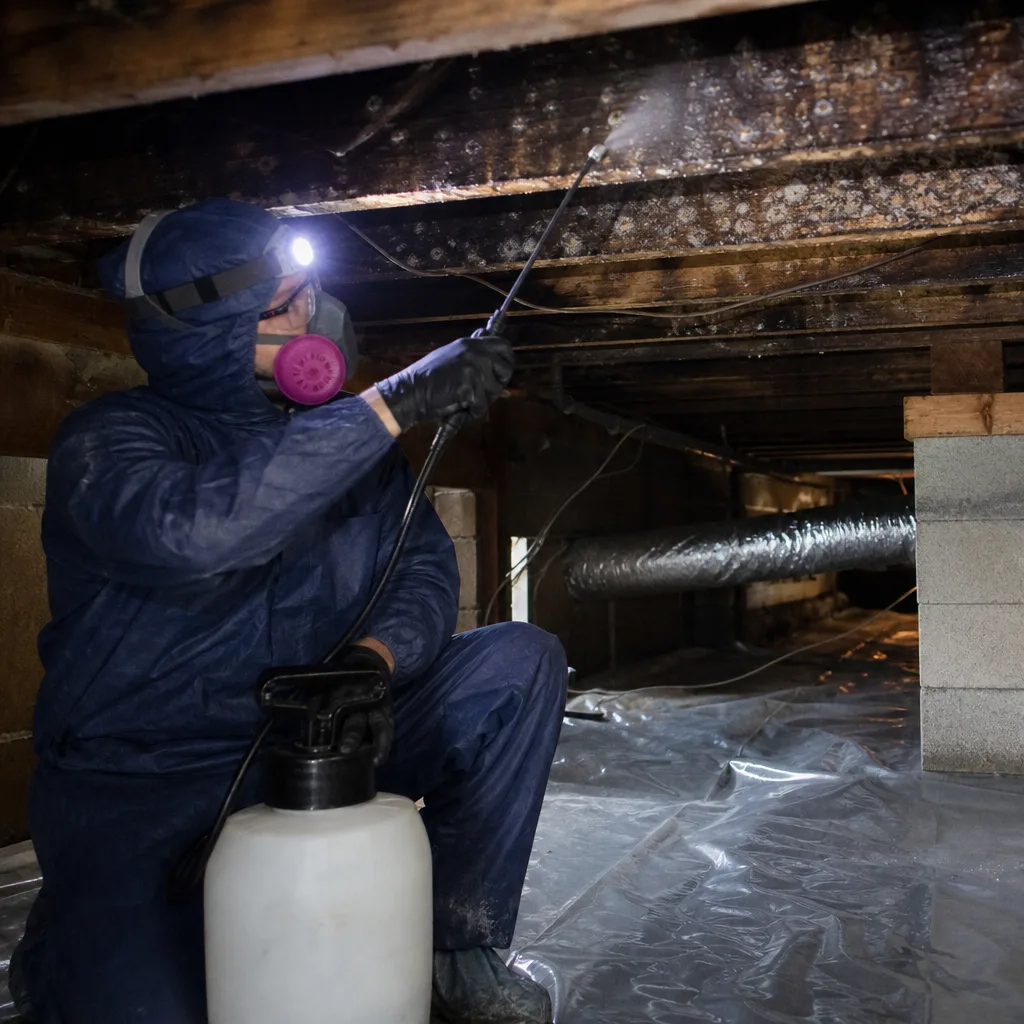
Structural Drying & Dehumidification
Structural drying is where most DIY attempts and cut-rate contractors fail. Proper drying requires calculating the vapor pressure differential between wet materials and the ambient air, then maintaining airflow and dehumidification capacity until the equilibrium moisture content of wood framing returns to baseline for Manhattan Beach’s coastal climate - typically eleven to thirteen percent, not the inland standard of ten. Our daily drying logs document this progression with readings at multiple depths and locations.
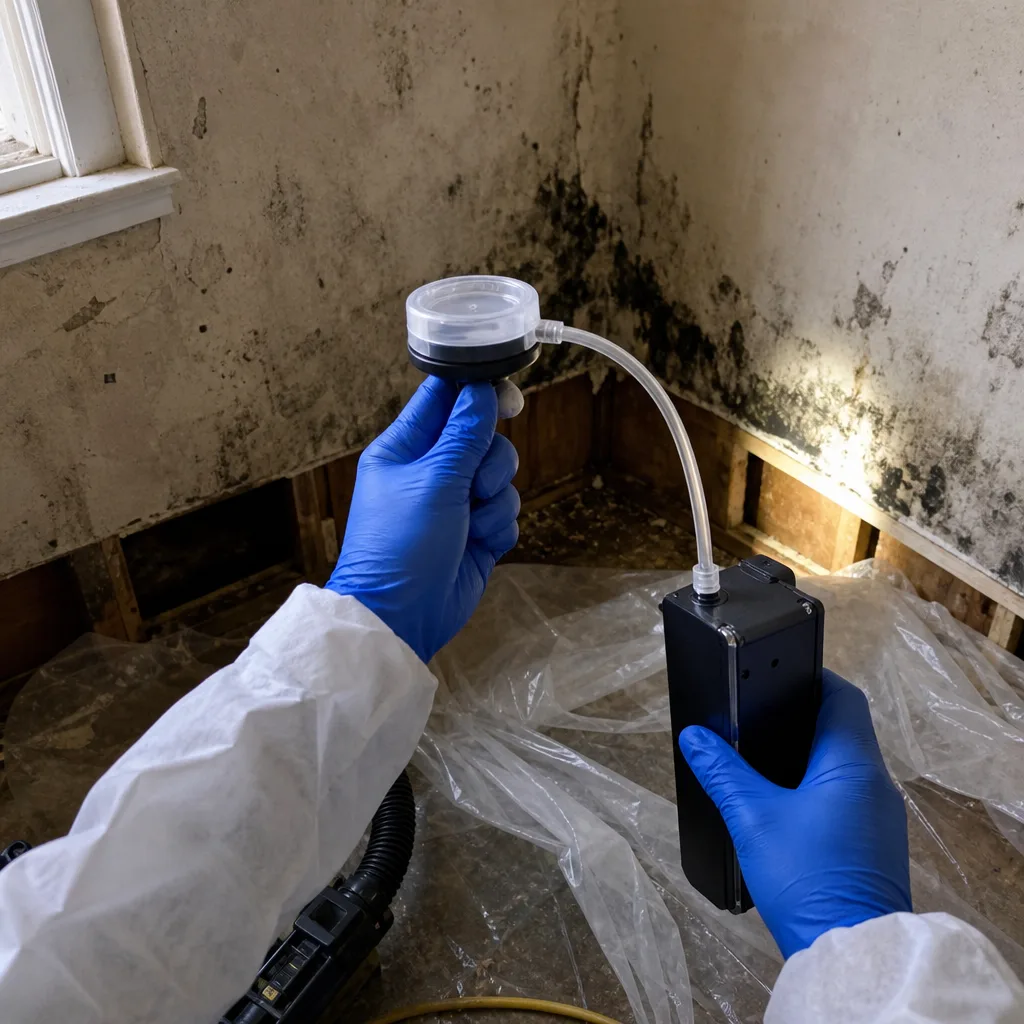
Flood Cleanup
Flood cleanup in Manhattan Beach encompasses everything from El Niño overwash to failed sump pumps in below-grade garages. Category 3 water - including any seawater intrusion - requires full personal protective equipment, antimicrobial treatment, and often removal of porous materials that cannot be sanitized. We document contamination levels with ATP testing and provide clearance documentation for your insurance file.
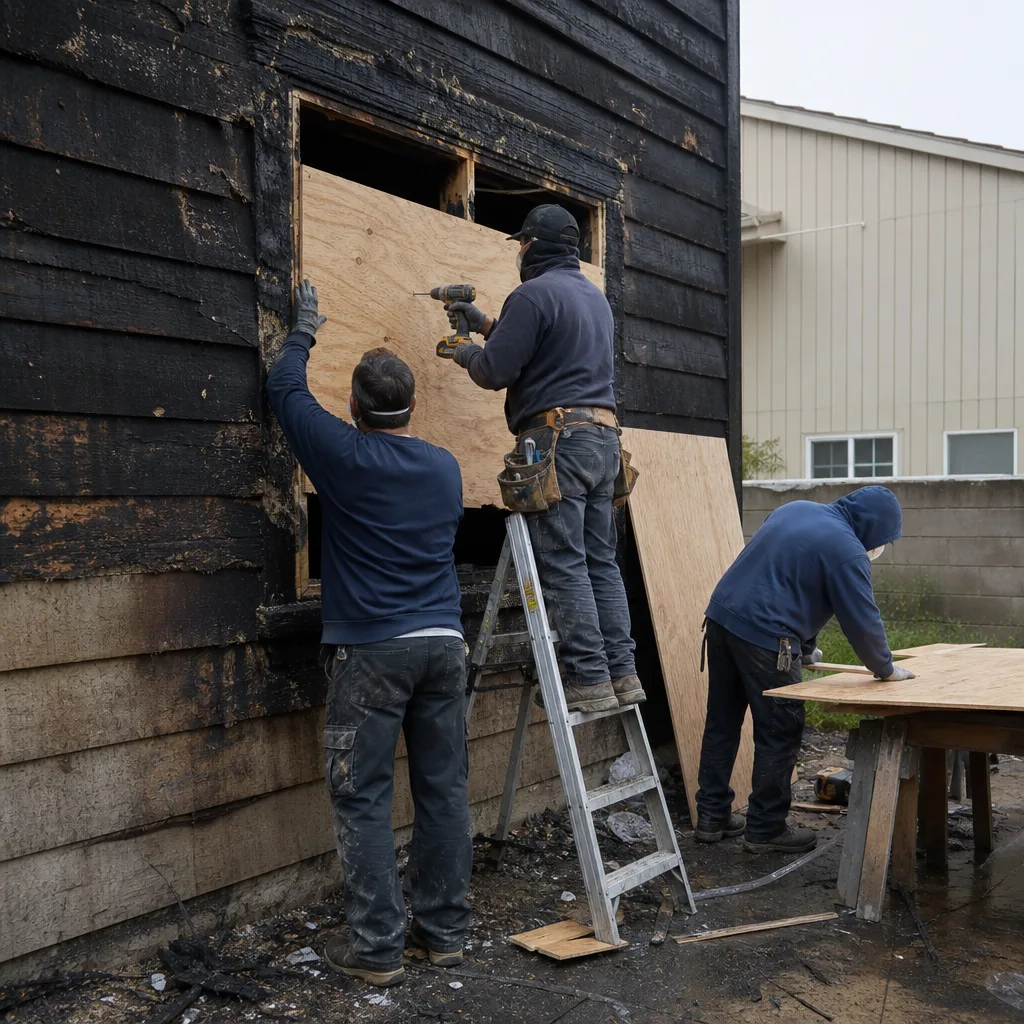
Burst Pipe Restoration
Burst pipes in Manhattan Beach’s older neighborhoods often trace to corrosion from the inside of galvanized lines, not external freezing. When a Tree Streets home built in 1935 loses a supply line, we’re extracting water from original lath-and-plaster walls that hold moisture like a sponge and require specialized injection drying or controlled demolition. We locate the failure, document the cause for your adjuster, and restore with materials matched to existing construction.
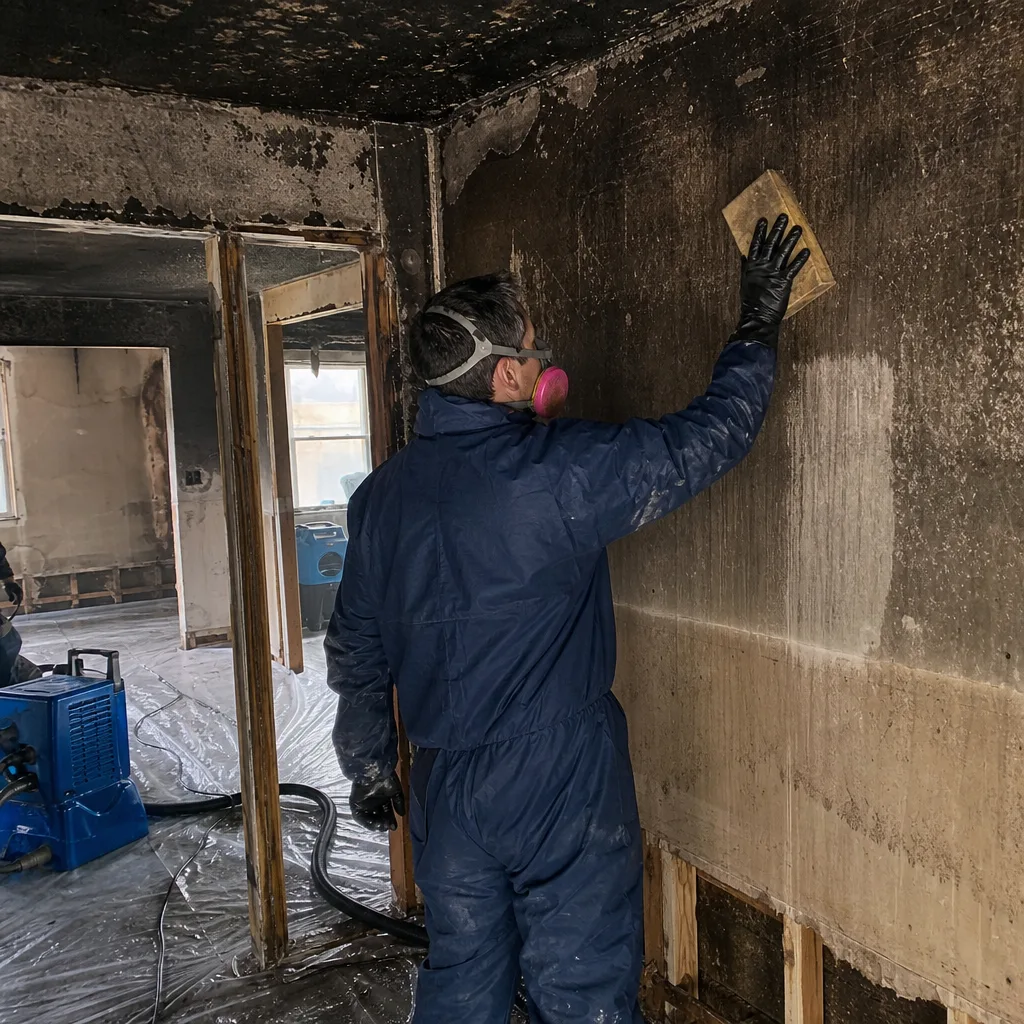
Basement Water Removal
Manhattan Beach doesn’t have basements in the traditional sense, but the below-grade garages of Sand Section three-story homes function identically - and flood identically. These spaces house electrical panels, HVAC equipment, and stored property in a concrete box with a single drain that overwhelms during any significant water event. We extract, dry, and inspect all mechanical systems for salt-water corrosion before certifying the space safe for occupancy.
What happens when you call
- 1
A real person answersNo phone trees - you reach a local pro.
- 2
You get an upfront price rangeHonest numbers before anyone is dispatched.
- 3
A background-checked tech heads outLicensed & insured, dispatched right away.
- 4
You approve before work beginsNothing starts until you say go.
Water Damage Restoration Costs in Manhattan Beach, CA
Emergency water extraction in Manhattan Beach runs $950-$2,400 for residential properties, depending on standing water volume and access constraints. Full structural drying with dehumidification, air movers, and daily moisture logging typically ranges $1,800-$4,200 for a standard single-family loss affecting two to four rooms. Category 3 flood cleanup with contamination protocols, PPE, and material removal starts at $3,500 and can exceed $8,500 for extensive Sand Section properties with premium finishes requiring matched replacement.
What moves the price: the water category (clean vs. contaminated), the affected square footage, the presence of salt-water corrosion requiring marine-grade hardware replacement, and whether interstitial drying can avoid demolition. Insurance typically covers sudden and accidental water damage, including extraction, drying, and restoration to pre-loss condition; gradual leaks and maintenance-related failures are generally excluded. We provide a written scope with firm pricing before any work begins - Haven Standard, Clause 1 - and offer a free second opinion on any competitor’s written estimate.
We Also Serve Cities Near Manhattan Beach
Our crews respond throughout the South Bay from our Los Angeles office, including Manhattan Beach and neighboring communities. We maintain the same response commitment and documentation standards in Hermosa Beach, where the Strand properties share Manhattan Beach’s salt-air corrosion challenges; El Segundo, with its mix of aerospace-era housing and newer infill; Lawndale, where post-war tract homes present different plumbing vulnerability patterns; and Hawthorne, with commercial and residential properties requiring coordinated loss documentation for business interruption claims.
Serving Manhattan Beach, CA - Our Local Coverage Area
We’re based in the Manhattan Beach area and know this community well. Use the map below to see our service coverage - if you’re nearby, we can almost certainly help.
Manhattan Beach Water Damage Restoration Questions, Answered
Why does water damage happen so often in Manhattan Beach Sand Section garages?
Salt-laden marine air corrodes garage-door springs, hinges, rollers, tracks, and fasteners years faster than inland neighborhoods, and when this hardware fails, doors are left ajar during coastal storms or high-tide events, allowing direct water intrusion into below-grade spaces. The chronic corrosion is environmental, not maintenance-related, and standard replacement parts without marine-grade coatings fail again within two to three seasons. We specify galvanized coated springs and stainless hardware on every Sand Section job, documented in your written scope. Call (424) 372-0129 for a free inspection of your garage-door hardware condition.
How quickly can mold grow in a Manhattan Beach home after a leak?
Mold colonization can begin within twenty-four to forty-eight hours of moisture intrusion, and in Manhattan Beach, the persistent marine layer often sustains growth even without an active leak. We find hidden mold behind tile and under flooring in outwardly dry homes, particularly in the Tree Streets and Hill Section where original construction lacks modern vapor barriers. Our moisture mapping identifies these conditions before visible growth appears, and our drying protocols include antimicrobial treatment as standard. Call (424) 372-0129 if you suspect hidden moisture.
What is category 2 water and why does it matter in Manhattan Beach restoration?
Category 2 water, or “gray water,” contains chemical or biological contaminants that elevate health risk and change both remediation protocol and insurance coverage; in Manhattan Beach, this commonly occurs when marine-layer moisture or El Niño overwash enters through compromised garage-door seals and mixes with garage chemicals, HVAC condensate, or stored materials. Category 2 requires antimicrobial treatment, limited salvage of porous materials, and more extensive documentation for insurance. Misclassifying category 2 as clean water can result in denied claims and unresolved contamination. We test and document water category at arrival on every job.
Do you use marine-grade parts for garage-door repairs in Manhattan Beach?
Yes, on every Sand Section and Strand-adjacent property where salt-air corrosion is the documented cause of water intrusion, we specify galvanized coated torsion springs, stainless steel hinges and rollers, and marine-grade fasteners rated for coastal exposure. Standard hardware fails predictably in this environment, and repeat water damage from the same failure mode is preventable with proper material specification. This is documented in your written scope as corrosion-resistant hardware replacement, not an upsell. Call (424) 372-0129 to schedule a corrosion inspection.
How do you handle water damage in a narrow three-story Sand Section home?
These builds have minimal chase space between floors, so water travels vertically through utility penetrations faster than it spreads laterally, requiring interstitial drying with Injectidry systems that force dry air through wall cavities without demolition. Below-grade garages function as collection points for water from all floors, and access constraints often require portable extraction equipment rather than truck-mounted units. We map moisture at multiple elevations, document vertical migration paths for your adjuster, and dry to coastal-equilibrium standards that account for Manhattan Beach’s baseline humidity. Every step is photo-documented and logged daily.
How fast can you actually get to my Manhattan Beach property?
We commit to forty-five minutes from dispatch to arrival for emergency water damage calls in Manhattan Beach, with crews staged from our Los Angeles office and no voicemail delay on emergency lines. The first hour determines whether you’re looking at extraction and drying or full reconstruction, and we don’t queue emergencies for business hours. Live answer at (424) 372-0129, twenty-four hours a day.
Will my insurance cover water damage restoration in Manhattan Beach?
Sudden and accidental water damage from burst pipes, appliance failures, or storm intrusion is typically covered under standard homeowners policies, including extraction, structural drying, and restoration to pre-loss condition. Gradual leaks, maintenance-related failures, and flood damage from seawater overwash require separate flood coverage through NFIP or private carriers. We document cause, timeline, and water category from hour one to support your coverage determination, write scopes to Xactimate standards, and communicate directly with your adjuster. Call (424) 372-0129 and we’ll review your specific situation at no charge.
Can we stay in our home during water damage restoration?
Occupancy depends on water category, affected areas, and equipment noise and heat. Category 1 water damage confined to non-sleeping areas often allows continued residence with containment barriers; category 2 or 3 contamination, or drying equipment in bedrooms, typically requires temporary relocation. We assess this at inspection and document our recommendation for your insurance file, as additional living expenses may be covered. Your written scope includes a clear occupancy determination before work begins.
Written by Alicia Brennan, Owner at Back to Dry Restoration, serving Manhattan Beach since 2011.
Water Damage Restoration in Nearby Areas